- Proudly Made in the USA
A 45 minute fire rated door can provide valuable time when smoke and flames threaten a corridor, stairwell, or room. But its rating is not a promise that every fire will be contained for exactly 45 minutes. Performance depends on the tested door assembly, frame, hardware, installation, and ongoing maintenance. The door should close fully and latch securely; even a small gap can undermine the protection people expect.
The scale of fire risk is real. NFPA’s report, Fire Loss in the United States During 2023, estimated 1.39 million fires and 3,670 civilian fire deaths in the United States. Those figures do not prove that one door rating prevents a particular loss. They do show why passive fire protection deserves careful attention. NFPA fire analyst Marty Ahrens has documented these fire-loss trends. An editorial takeaway—not a verbatim quotation from Ahrens—is: “A door rating matters only when the complete opening performs as tested.”
Choosing a 45 minute fire rated door may suit openings where the applicable design calls for that level of protection. Confirm the rating against the building’s fire-safety plans and the door’s certified documentation. Check labels, compatible hardware, seals, and installation details. Ask who will inspect and maintain it. A rating alone is not enough. The right choice is a verified assembly, correctly fitted, that occupants can use safely every day.
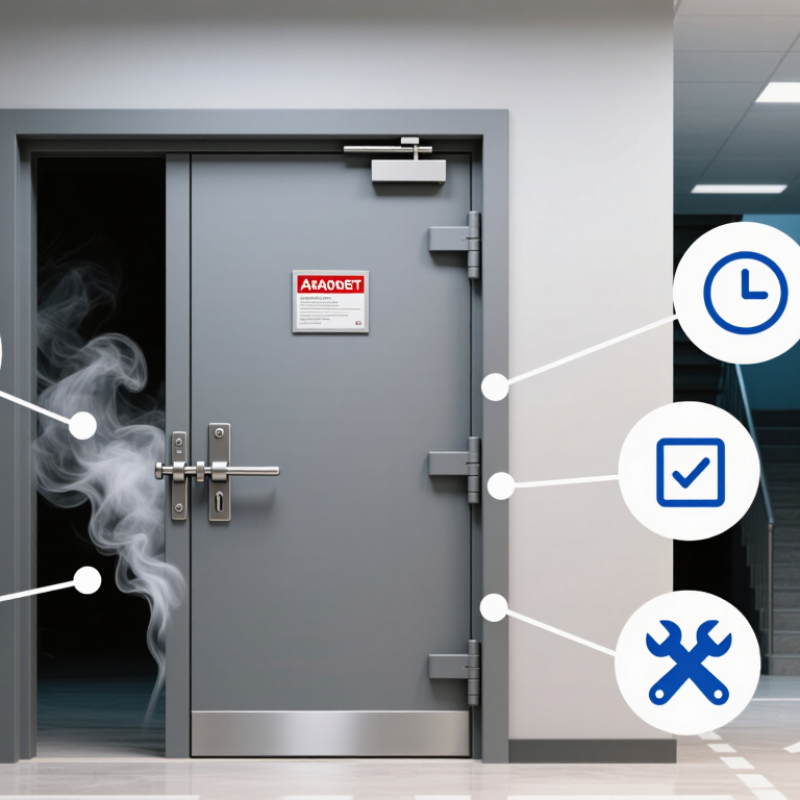
A 45-minute fire-rated door is a tested door assembly designed to resist fire exposure for a specified period under controlled test conditions. The rating applies to the assembly, not just the door leaf. It typically includes the frame, hinges, latch, closer, glazing, and installation details. In the United States, fire-door assemblies are tested under standards such as NFPA 252 or UL 10C. A 45-minute rating does not mean every fire will behave predictably for exactly 45 minutes. Real performance depends on correct installation, maintenance, and the surrounding wall.
That distinction matters. A common mistake is to focus on the label and overlook gaps, damaged seals, or a door that will not latch. NFPA’s Fire Loss in the United States During 2023 report estimated 1,389,000 fires responded to by U.S. fire departments, underscoring why verified protection at openings matters. NFPA 80 provides inspection and maintenance requirements for fire doors. In practice, a properly fitted door should close fully and latch without being pushed. Even a small obstruction can compromise its intended function. The rating is useful, but it is not a substitute for inspection or a guarantee against smoke and heat.
A 45-minute fire rating describes how long a tested door assembly resisted fire under controlled laboratory conditions. It does not mean every door will last exactly 45 minutes in a real building. NFPA 252 and UL 10C set test procedures for fire-door assemblies, including the door, frame, hardware, and any glazing. The rating applies to the tested configuration, not simply to a door slab with a matching label.
The test exposes the assembly to a rising furnace temperature. For context, ASTM E119’s standard time-temperature curve reaches about 1,700°F at 60 minutes. A 45-minute test is part of that severe, controlled exposure—not a prediction of conditions in a specific fire. Inspectors also check whether the assembly stays in place and limits openings that could let flames pass. Details matter: a missing closer, loose latch, or damaged edge can undermine the protection. That number can feel reassuring, perhaps too reassuring. It is a test result, not a promise.
Choosing a 45-minute door can suit openings where the building’s fire-protection design calls for that rating. Confirm the label, frame, hinges, latch, and closer match the approved assembly. Have qualified personnel inspect the complete opening and follow applicable local requirements. Fire doors are easy to overlook. They should not be.
Why Choose a 45 Minute Fire Rated Door?
Where 45-Minute Fire-Rated Doors Are Used
A 45-minute fire-rated door may suit openings where a building’s fire strategy calls for a defined level of protection. You may find one between an apartment and a shared corridor, in an office partition, or near a service room. The right location depends on the building’s design and applicable requirements. A rating is not a promise that every fire will remain contained for 45 minutes.
Details matter. The door, frame, seals, hinges, latch, and closer must work as a compatible assembly. In everyday use, a door may be wedged open for deliveries or fail to latch after repeated use. That small habit can undermine its intended performance. An installer or qualified fire-door professional can check the opening, labels, clearances, and hardware. Appearance alone is not enough.
Tips: Check that the door closes and latches fully. Keep seals clear of paint and debris. If it scrapes, sticks, or has been altered, arrange an inspection before relying on it.
| Where it may be used | Typical application | Why a 45-minute rating may be appropriate | Key checks |
|---|---|---|---|
| Openings in certain 1-hour fire barriers | Doorways through a fire barrier where the applicable building code permits a 45-minute opening protective. | In common International Building Code provisions, a 1-hour fire barrier can require a 45-minute-rated opening protective. | Confirm the wall’s required rating, occupancy, adopted code edition, and any exceptions with the authority having jurisdiction. |
| Openings in certain 1-hour fire partitions | Doorways in fire partitions where the applicable code’s opening-protective table allows a 45-minute door assembly. | The rating can match the opening-protective requirement for the specific partition and building use. | Do not assume every 1-hour partition needs the same door rating; check the code section and approved plans. |
| Some corridor openings | Doors in corridor walls that are required to be fire-resistance-rated, when the applicable code permits this rating. | A 45-minute assembly may be suitable for particular corridor-wall configurations; requirements vary with the building and corridor design. | Check corridor rating, sprinkler provisions, door location, smoke-control requirements, and local amendments. |
| Service or storage-area entrances | Entrances to service, storage, or support spaces where the doorway is part of a code-required rated wall. | The required rating depends on the wall’s function and the room’s hazards—not on the room label alone. | Verify whether the opening needs a 45-minute assembly or a different rating, such as 20, 60, or 90 minutes. |
| Existing buildings and replacement projects | Replacement or upgrade of a door in an existing rated opening, subject to the approved design and local requirements. | A correctly specified assembly can maintain the required protection while matching the opening’s documented rating. | Check existing labels, frame compatibility, hardware, clearances, and whether the authority requires a higher-rated assembly. |
Important: A 45-minute fire rating is not a universal requirement or a guarantee of protection for exactly 45 minutes in every fire. The required rating depends on the applicable code, wall assembly, opening location, and tested door-and-frame assembly. Install and maintain the complete assembly in accordance with its listing and applicable requirements, including NFPA 80 where adopted.
A 45-minute fire-rated door is designed to resist fire for a tested period as part of a complete door assembly. That assembly may include the door leaf, frame, hinges, latch, and seals. The rating is not a promise that every real fire will behave the same way. Conditions vary.
In a home, office, or shared hallway, a closed door can slow fire and help limit its spread between spaces. That separation may keep an escape route usable for longer and give occupants more time to move toward safety. Every second matters. A door only helps when it closes fully and its hardware works as intended. Smoke protection also depends on the door’s design and seals; a fire rating alone does not describe every smoke-control feature.
The protection can benefit property, too. Slowing fire may reduce damage in rooms beyond the source, while a closed door can help contain heat and flames. Small gaps matter. Regular checks can reveal loose hinges, damaged seals, or a latch that no longer catches. One common oversight is propping a door open for convenience. It seems harmless during a busy day, but it can defeat the barrier when it is needed most. Installation and maintenance should follow the door’s tested specifications and applicable building requirements.
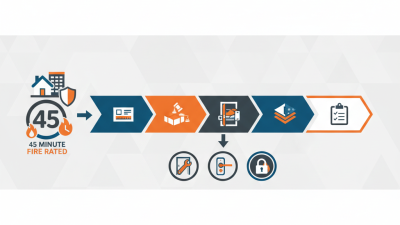
A 45-minute fire rating applies to a tested door assembly, not just the door slab. Check that the frame, hinges, latch, closer, and any glazing are approved for that assembly. Keep the certification label visible and compare the product documents with the opening’s requirements. It is easy to focus on the door alone. That can be a mistake.
Before installation, measure the opening and inspect the frame for looseness, damage, or twisting. Follow the manufacturer’s instructions for clearances, fixings, and approved seals; requirements can vary by product and location. The door should close fully and latch without being pushed. Check that floor coverings or stored items will not obstruct it. Small details matter.
After fitting, open the door and let it close several times. Watch for rubbing, a weak closer, or a latch that fails to engage. Do not drill, trim, or replace hardware unless the assembly’s instructions allow it. A neat-looking installation is not proof of correct performance. Even a careful checklist can miss a poor fit, so have a qualified installer inspect uncertain details. I would not guess at a gap measurement when the product documents provide the correct limit.
Fire-door ratings indicate the duration a door assembly is designed to resist fire under specified test conditions. A 45-minute rating can suit openings where that rating is required by the applicable building code and fire-protection plan.
What to check: Confirm the required rating for the opening, verify the door and frame labels, and ensure the complete assembly—including hinges, latch, closer, glazing, seals, and hardware—is listed for the intended use. Install and maintain it according to the manufacturer’s instructions and applicable local requirements.
Example rating durations shown for comparison; available ratings and code requirements vary by jurisdiction. A rated door’s performance depends on the tested assembly and correct installation.
Whether you’re looking for fire-rated walls, doors, openings, floors or a specialty service, we have the solution for you. With over 40 years of experience in testing, innovating, and providing technologically advanced fire-rated glass and framing products, we deliver unyielding performance and quality at a competitive price.