- Proudly Made in the USA
Garment Labels may be small, but they carry practical weight. A woven label can identify a brand, while a printed care label helps customers understand how to maintain a garment. Poorly cut edges, fading ink, or unclear text can undermine an otherwise well-made product. Buyers comparing global suppliers need to look beyond a polished catalogue.
Philip Crosby, the quality-management expert, wrote, “Quality is free.” For garment sourcing, that idea is useful: checking quality early may prevent costly rework later. Request samples and compare stitching, print clarity, color consistency, and feel against the intended fabric. Ask suppliers about minimum order quantities, production lead times, material options, and inspection procedures. Keep records of approved samples and specifications. Small details matter.
This guide presents ten garment label suppliers for global buyers, with attention to product range, customization, communication, and production capabilities. Supplier claims should be verified directly; capabilities and terms can change. Ask for current samples and documentation relevant to your project, rather than relying on a website alone. A neat comparison table helps, but it cannot reveal how a label feels after repeated washing. That takes testing. It is easy to overlook this step when deadlines are tight. Buyers should also consider whether a supplier can maintain consistency across repeat orders. No single supplier will suit every brand, and this overview is a starting point—not a substitute for careful evaluation.
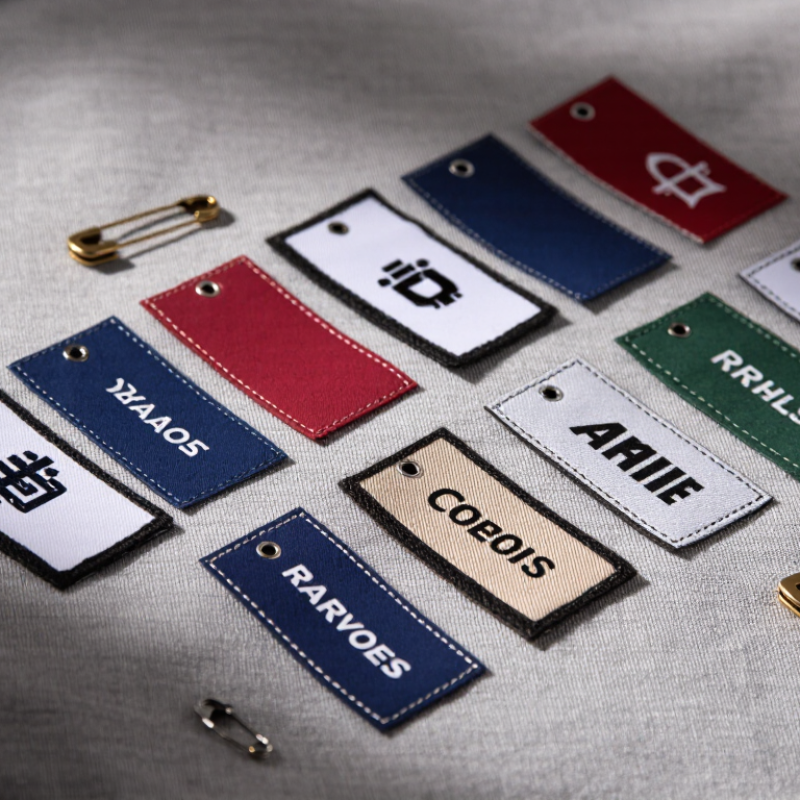
Garment label suppliers do more than print a size or care instruction. They help buyers turn product information into clear, durable details sewn or attached to each item. A woven label must stay readable after handling, while a care label needs legible symbols and enough space for accurate instructions. Suppliers also coordinate material choices, artwork files, color matching, sampling, and repeat orders. Small errors matter: a misplaced fiber percentage can create confusion across a whole production run. A label cannot correct weak product records, and that part is sometimes overlooked.
Textile Exchange reported 124 million tonnes of global fiber production in 2023, up from 116 million tonnes in 2022. That scale makes consistent product data and dependable label production especially important for international buyers. A capable supplier checks specifications before bulk production, confirms approved samples, and keeps revisions traceable. Ask how they control color differences between batches and verify that care information matches the garment. These checks are practical, not glamorous. They can still prevent costly rework.
Tips: Send a complete specification sheet with label dimensions, fabric content, colors, attachment method, and artwork. Request a pre-production sample, then compare it with the approved file. Keep one record of every change.

Garment labels vary in material, construction, and purpose. Woven labels offer a textured, durable finish for necklines or seams. Printed satin and cotton labels feel softer against skin and suit detailed care information. Heat-transfer labels remove sewn edges, which can help with close-fitting sportswear. Size tabs, care labels, and hang tags serve different needs, so buyers should compare placement and wear before choosing. Small details matter.
Tips: Request samples before approving a large order. Check whether text stays readable after washing, and feel the edges against skin. A sample can reveal problems that a digital proof misses.
Suppliers may also support artwork setup, material selection, label cutting, folding, and packaging. Ask how they check color consistency and legibility across repeat orders. Share garment fabric, intended placement, wash expectations, and target delivery window early; these details help avoid avoidable revisions. If sourcing across borders, confirm dimensions, packing quantities, and shipping terms in writing. I have seen buyers focus on price and overlook attachment methods; that can make a label awkward to sew into a finished garment. No single label type fits every product. A small trial run is often a sensible step.
These are supplier capability profiles, not company rankings. Materials, production options, certifications, and export services vary by supplier and should be confirmed when requesting a quotation.
| No. | Supplier specialization | Label types | Common materials | Typical customization | Services for global buyers | Common applications |
|---|---|---|---|---|---|---|
| 1 | Woven-label specialist | Main labels, brand labels, folded labels | Polyester yarn; cotton yarn may be available | Woven text or motifs, damask or satin construction, end folds, center folds, straight cuts | Artwork review, digital proofs, sample approval, folding and cutting options, export packing | Neck labels and sewn-in brand identification for apparel |
| 2 | Printed-fabric label specialist | Care labels, content labels, printed brand labels | Polyester satin, nylon, cotton, or other printable textile tapes | Text and symbols, single- or double-sided printing, cut-to-length or folded formats | Artwork and text checks, print samples, roll or piece packing, documentation support on request | Garment care, fiber-content, and origin information |
| 3 | Cotton and natural-fiber label specialist | Woven or printed cotton labels, soft brand tabs | Cotton and, where offered, other natural-fiber materials | Natural-color or dyed grounds, woven or printed artwork, custom dimensions and folds | Material and color sampling; certification documents may be available for qualified materials upon request | Casualwear, childrenswear, and products seeking a natural-fiber label appearance |
| 4 | Heat-transfer label specialist | Printed transfer labels and heat-applied size or care markings | Transfer films, inks, and application adhesives selected for the intended fabric | Color, artwork, dimensions, and application instructions; fabric compatibility should be tested | Application samples, press-setting guidance, wash testing options, and production-ready transfer sheets or rolls | Sportswear, activewear, and garments where a low-profile label is preferred |
| 5 | Care and compliance-label specialist | Care, fiber-content, country-of-origin, and warning labels | Printable satin, nylon, polyester, or other suitable label tapes | Text, care symbols, language versions, layout, and label dimensions | File checks and production of buyer-approved content; buyers should verify legal wording for each destination market | Apparel requiring care instructions and product information |
| 6 | Hang-tag and ticket supplier | Hang tags, price tickets, product-information cards | Paper or paperboard; specialty stocks and recycled-content options vary | Shape, size, print, hole position, coatings, string, and attachment options | Artwork proofs, material samples, variable information where supported, and packing by style or order | Retail product identification, pricing, and product messaging |
| 7 | Size-tab and small-format label supplier | Woven or printed size tabs and compact identification labels | Polyester, nylon, satin, or cotton tapes, depending on construction | Size systems, letter or number codes, color coding, and fold format | Size-set sampling, assortment packing, and coordination with main or care labels | Garment sizing and identification inside clothing |
| 8 | Embroidered-patch specialist | Embroidered patches, badges, and appliqués | Embroidery thread and textile backing; material choices depend on design and use | Stitching, shape, border, backing, and sew-on or heat-applied attachment options | Digitized artwork approval, sew-out samples, attachment guidance, and bulk packing | Uniforms, outerwear, sportswear, and decorative garment branding |
| 9 | RFID apparel-label supplier | RFID-enabled woven, printed, or hang-tag formats | Textile or paper label constructions incorporating an RFID inlay | Inlay selection, label format, encoding, and data format subject to system requirements | Encoding and testing may be offered; buyers should confirm chip, reader, and software-system compatibility | Inventory identification and retail supply-chain tracking |
| 10 | Multi-process label supplier | A combination of woven labels, printed labels, hang tags, and patches | Textile tapes, paperboard, threads, and other materials matched to each item | Coordinated colors, artwork, dimensions, and packaging across multiple label types | Consolidated sampling, purchase-order coordination, assortment packing, and export shipment planning where available | Buyers seeking several label components for a garment range |
A reliable garment label supplier should offer more than an attractive sample. Check whether its materials, print methods, and finishing options suit your product and expected wash conditions. Ask for a sample made with the same fabric and process planned for bulk production. Small details matter. Inspect edge fraying, color consistency, readable care text, and how smoothly the label folds against skin.
Ask how the supplier controls quality between sample approval and shipment. Useful answers include documented color references, batch checks, and a clear process for handling defects. Request a production timeline and confirm how changes to artwork or quantities affect it. Fast replies are helpful, but specific answers are better. If a supplier cannot explain how it checks a recurring issue, treat that as a point to investigate.
Compare quotes on equal terms: label size, material, order quantity, packaging, and delivery arrangements. A low unit price may exclude setup costs or leave little room for reorders. Check whether the supplier can provide traceable order records and consistent specifications across batches. No checklist catches everything. Even careful reviews can miss a small shade difference under factory lighting, so approve a physical sample in realistic conditions and keep a signed reference for future orders.
Suggested evaluation weights for comparing suppliers serving global buyers
These percentages are an illustrative buyer evaluation framework, not survey results or claims about specific suppliers. Adjust the weights to match your product, compliance needs, order volumes, and delivery requirements.
A useful comparison of ten garment label suppliers should look beyond price sheets. Each profile needs to show label formats, material options, print durability, minimum order quantities, and production capacity. Ask how a supplier handles small test runs, repeat orders, and colour matching. A woven label may feel crisp in the hand, while a printed care label can fit a narrow seam. Details matter.
Material claims deserve careful checking. Textile Exchange’s Materials Market Report 2024 estimates that global fiber production reached 124 million tonnes in 2023. That scale makes clear material specifications important, especially when labels identify fiber content or support traceability. For each supplier, review sample documentation, testing methods, and how specification changes are recorded. OECD guidance for the garment and footwear sector also emphasizes risk-based due diligence across supply chains. A polished profile is not proof of reliable oversight.
Request physical samples, not just digital mockups. Check small type, edge finish, wash performance, and attachment strength. Ask for realistic lead times and a named quality contact. Then compare the ten profiles using the same criteria. Some details may remain unclear. Note those gaps, and verify them before placing a production order.
A fair comparison starts with samples, documents, and delivery terms—not the quoted unit price alone. Check print alignment, cut edges, wash durability, and whether adhesive lifts from the actual garment fabric. Ask for test records linked to the specific material and production site. A certificate can be out of date. Small details matter.
Compliance needs evidence beyond a supplier’s assurance. Fashion Revolution’s 2023 Fashion Transparency Index assessed 250 major fashion companies and reported an average score of 26%. That is not a rating of label factories, but it highlights how difficult supply-chain visibility can be. Request facility-level records, subcontractor disclosure, and dated corrective actions. Verify the paperwork.
Compare total landed cost, including setup charges, minimum quantities, freight, inspection, and possible rework. Then separate production time from shipping time, and ask suppliers to state both in writing. UNCTAD reported in January 2024 that weekly Suez Canal transits had fallen 42% over two months, amid shipping disruptions. Build realistic buffers into delivery plans. I would not treat a quoted lead time as a guarantee; even careful forecasts can miss.
Whether you’re looking for fire-rated walls, doors, openings, floors or a specialty service, we have the solution for you. With over 40 years of experience in testing, innovating, and providing technologically advanced fire-rated glass and framing products, we deliver unyielding performance and quality at a competitive price.
