- Proudly Made in the USA

Choosing China’s top Wall Panels manufacturers requires more than comparing catalog photos or factory prices. Global buyers need evidence of material quality, production consistency, design capability, and export experience. A reliable supplier should explain its core materials, surface finishes, dimensions, fire performance, moisture resistance, acoustic options, and installation methods. Factory audits, sample testing, production records, and clear communication can reveal details that online listings often hide.
Joseph Lstiburek, a widely recognized building-science expert, stated, “The perfect wall has all of the control layers on the exterior of the structure.” This principle matters when evaluating Wall Panels for commercial interiors, residential projects, hotels, and public buildings. Attractive panels are not enough. Their backing systems, joint treatment, thermal movement, and moisture protection also affect long-term performance. Small details matter.
This guide examines leading Chinese manufacturers through practical criteria, including manufacturing capacity, customization, quality control, certifications, packaging, lead times, and after-sales support. It also considers whether suppliers can provide stable color batches and protective cartons for long-distance shipping. Some manufacturers present impressive factories but offer limited technical documentation. Others may provide excellent panels yet lack strong project coordination. That contradiction deserves attention.
No ranking is completely perfect. Product data can change, and buyer requirements differ by climate, building type, and destination standards. Therefore, readers should verify current samples, test reports, factory information, and contract terms before placing an order. The goal is not to promote the cheapest option. It is to identify manufacturers capable of delivering dependable Wall Panels with fewer surprises.
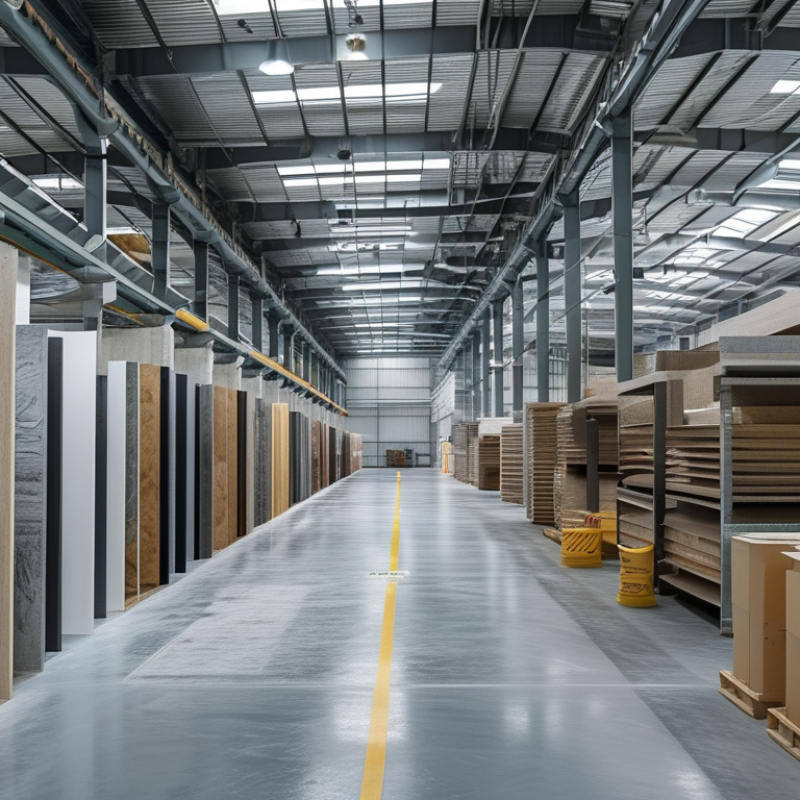
Wall panels are factory-made surfaces installed over walls for protection, insulation, decoration, or acoustic control. Common options include PVC, WPC, MDF, fiber cement, metal, and stone veneer panels. Their finishes can resemble oak grain, brushed concrete, or matte plaster. A 2024 Grand View Research report valued the global wall panels market at approximately USD 19 billion in 2023 and forecast steady growth through 2030. Demand is linked to faster renovation, modular construction, and stricter building-performance expectations.
China is attractive because its manufacturing network covers raw materials, tooling, finishing, packaging, and container logistics. Buyers can compare several panel structures within one sourcing region. This supports custom thicknesses, fire ratings, surface textures, and private packaging without changing suppliers repeatedly. The China Chamber of Commerce for Import and Export of Light Industrial Products reported continued strength in China’s building-material exports during 2023, although category definitions differ between reports. That limitation matters.
Do not judge a panel by photographs alone. Request test reports, moisture data, formaldehyde results, and installation samples. ISO 9001 can show process control, but it does not prove every product is safe or compliant. I have seen attractive samples fail during edge-cutting or humid storage. A better review checks core density, locking accuracy, carton protection, and batch consistency. Freight savings may disappear when panels need oversized packaging. That is often overlooked.

China’s wall panel industry is concentrated in several manufacturing regions, each with different strengths. Guangdong supports PVC, WPC, and decorative interior panels, with mature molding, printing, and export packaging. Zhejiang is known for integrated production, especially bamboo-charcoal panels, acoustic products, and quick-install systems. Jiangsu and Shandong offer broader material options, including metal, mineral, and exterior cladding panels. Production capacity can range from small custom workshops to automated factories with continuous lamination lines.
From supplier visits, I have found that equipment alone does not prove reliability. A factory may show a polished sample, yet its batch consistency needs closer inspection. Ask for recent production records, core-density data, dimensional tolerances, and fire-test documentation. Confirm whether testing applies to the exact panel structure, not a similar model. Export experience also matters because moisture protection, pallet design, and container loading affect arrival quality. Small details matter.
Tips: Match the region to your project. Choose Guangdong for flexible decorative orders, Zhejiang for integrated systems, and Jiangsu or Shandong for heavier technical panels. Request samples from different production batches. Check edges, locking joints, surface adhesion, and odor after unpacking. Clarify minimum order quantities and replacement procedures in writing. I would not rely on catalog photos alone; factory audits and independent testing remain worthwhile.
Global buyers can choose from several wall panel types, each serving a different project need. PVC and SPC panels resist moisture, making them suitable for bathrooms, kitchens, and commercial interiors. WPC panels offer a warmer wood-like appearance with easier maintenance than natural timber. Decorative slat panels add texture and can improve visual comfort in offices, hotels, and living spaces.
Acoustic panels help reduce echo in meeting rooms, studios, and restaurants. Mineral fiber and other fire-rated panels may support projects with stricter safety requirements, but buyers should verify tested performance for their destination market. Exterior wall panels need stronger resistance to rain, sunlight, temperature changes, and impact. A panel that performs well indoors may fail outdoors. This is often overlooked.
Tips: Request samples, technical data sheets, installation guides, and independent test reports. Check panel thickness, core density, surface durability, fire classification, and warranty terms. Confirm whether accessories are available in matching colors. Ask about container loading and moisture protection during shipping. Do not judge quality by appearance alone. I have seen attractive panels show edge damage after installation, usually because expansion gaps were ignored. Some specifications also sound impressive but lack clear testing details. That deserves a second look.
China Top Wall Panels Manufacturers for Global Buyers
How to Evaluate China’s Wall Panel Manufacturers
Choosing a wall panel manufacturer requires more than comparing online prices. Examine production experience, material knowledge, and quality controls. Request factory photos, product specifications, and recent project references. A reliable supplier should explain the panel core, surface finish, moisture resistance, and installation method clearly.
Tips: Order samples before discussing large quantities. Check panel thickness with a caliper. Inspect edges, color consistency, surface flatness, and packaging quality. Ask for test reports from recognized laboratories. Confirm whether the reports match the exact model you plan to buy. Small details matter.
Evaluate the factory’s daily process, not only its showroom. Ask how workers control cutting accuracy, adhesive application, curing time, and batch records. Discuss your climate and building conditions. Panels for humid coastal areas may require different protection than products for dry interiors. Confirm lead times, replacement procedures, and inspection rights in writing. A common mistake is trusting impressive samples without testing full production batches. A sample can still mislead. Also, the cheapest quote may hide thinner materials, weak cartons, or unstable color matching. Request a pre-shipment inspection and compare delivered panels against the approved sample. No evaluation method is perfect, so keep clear records and challenge unclear answers.
| Evaluation Dimension | Suggested Weight | Objective Benchmark or Requirement | Documents or Tests to Request | Buyer Verification Method | Priority |
|---|---|---|---|---|---|
| Product Composition | 10% | The supplier should clearly state the core material, surface layer, backing layer, adhesives, additives, and nominal thickness. Material descriptions should remain consistent across the quotation, technical sheet, and packaging. | Technical data sheet, bill of materials, sample cross-section, safety data sheets where applicable. | Compare the physical sample with the declared structure and verify thickness at several points using a calibrated gauge. | High |
| Dimensional Accuracy | 10% | Length, width, thickness, squareness, flatness, and joint tolerances should be defined in the product specification rather than described only as “standard.” | Dimension-tolerance sheet, inspection standard, pre-shipment inspection report. | Measure multiple pieces from different cartons and record the maximum deviation from the approved specification. | High |
| Formaldehyde and VOC Emissions | 12% | For products marketed under Chinese indoor-air requirements, GB 18580-2017 uses an E1 formaldehyde emission limit of ≤0.124 mg/m³ under its specified chamber test method. Lower-emission classifications or project requirements may apply. | Recent laboratory report identifying the exact product construction, test method, sample date, and laboratory details. | Confirm that the report covers the supplied panel, not only a raw board or unrelated product family. Check the laboratory’s accreditation scope. | Critical |
| Fire Performance | 15% | Fire performance depends on the complete panel system, including core, finish, joints, and installation. ASTM E84 Class A corresponds to a flame-spread index of 0–25 and a smoke-developed index of 0–450 when tested under that method. | Full-panel fire-test report, classification certificate where applicable, installation details, and test configuration. | Match the tested thickness, coating, substrate, joint treatment, and installation method to the proposed project specification. | Critical |
| Moisture and Water Resistance | 10% | The supplier should define whether the panel is suitable for dry rooms, humid rooms, splash zones, or exterior use. No generic “waterproof” claim should replace a stated test method and exposure limit. | Water-absorption, dimensional-stability, humidity-resistance, or relevant project-specific test report. | Review edge sealing, backing protection, installation joints, and the warranty exclusions for standing water or high humidity. | High |
| Mechanical Durability | 8% | Performance should be assessed using tests relevant to the intended use, such as surface abrasion, impact, scratch, adhesion, or pull-off resistance. The correct test depends on the panel type and application. | Product-specific durability test reports, coating-adhesion results, maintenance instructions. | Inspect corners, decorative layers, edges, and locking profiles on production samples; conduct a documented sample approval before mass production. | High |
| Color and Surface Consistency | 7% | Color, gloss, texture, pattern direction, and allowable batch variation should be defined through an approved master sample or measurable color-control process. | Approved color sample, color-tolerance policy, batch inspection photos, surface-finish specification. | Compare panels under consistent lighting and inspect samples from separate production batches for shade and texture variation. | Medium |
| Quality Management | 8% | A documented incoming-material, in-process, and final-inspection system should exist. ISO 9001 certification can support process verification, but it does not replace product testing. | Quality manual summary, inspection checklist, corrective-action records, ISO 9001 certificate if claimed. | Verify certificate validity and scope through the issuing certification body or an accepted certification database. | High |
| Production Capacity and Lead Time | 8% | The supplier should provide realistic capacity, minimum order quantity, sampling lead time, mass-production lead time, and peak-season planning assumptions. | Capacity statement, production schedule, sample timeline, purchase-order milestone plan. | Use a pilot order to compare promised and actual lead times; confirm that capacity applies to the required finish and specification. | High |
| Export Packaging and Logistics | 5% | Packaging should protect against edge damage, abrasion, moisture, and carton compression during multimodal transport. Carton marks and packing lists should support traceability. | Packing specification, carton dimensions, loading plan, shipping marks, moisture-protection details. | Approve a packed sample or inspect loading photographs; verify carton quantity, net weight, gross weight, and pallet stability. | Medium |
| Traceability and After-Sales Support | 7% | Each production batch should be traceable to raw materials, production date, inspection results, and shipment records. Warranty terms should identify exclusions and remedies. | Batch-coding example, inspection records, warranty terms, complaint-response procedure. | Ask the supplier to trace a sample carton back to its production and inspection records before placing a large order. | High |
China Top Wall Panels Manufacturers for Global Buyers
Export, Compliance, and Purchasing Considerations
China remains a major sourcing base for wall panels, but export success depends on documented control. The United Nations Conference on Trade and Development reports that over 80% of global merchandise trade moves by sea. Buyers should therefore confirm moisture protection, container loading, and cargo insurance before production begins. A wet carton can damage otherwise compliant panels.
Compliance must match the destination market. For fire performance, request test reports under EN 13501-1, ASTM E84, or the relevant local standard. Do not accept a generic “fireproof” statement. Ask for the tested panel structure, thickness, installation method, and report validity. ISO 9001 certification supports process consistency, but it does not prove every shipment meets specifications. That distinction is often missed.
Purchasing teams should compare more than unit price. Check core density, surface coating, dimensional tolerance, formaldehyde emissions, packaging strength, and replacement policy. The World Bank’s Logistics Performance Index 2023 highlights customs, infrastructure, and shipment tracking as major supply-chain factors. These details affect landed cost. A pre-shipment inspection can verify carton counts, color batches, and random dimensions. It cannot predict every installation problem. Samples also deserve careful review, because small sample pieces may hide joint, warping, or color-matching issues. Performance data should be linked to a written purchase specification, not only a supplier quotation.
Indicative procurement priorities for export, compliance, and purchasing evaluation. The percentages represent a neutral buyer-planning framework, not company market share or brand performance.
Compliance and fire-safety documentation should be verified for the destination market. Buyers should also confirm product specifications, testing reports, landed cost, production capacity, and sustainability documentation before placing an order.
Whether you’re looking for fire-rated walls, doors, openings, floors or a specialty service, we have the solution for you. With over 40 years of experience in testing, innovating, and providing technologically advanced fire-rated glass and framing products, we deliver unyielding performance and quality at a competitive price.
