China Top PU Foam Sealant Manufacturers for Global Buyers
Choosing reliable PU foam sealant manufacturers requires more than comparing prices, product photos, or export claims. Global buyers need evidence from the factory floor: controlled mixing, sealed packaging, batch records, and consistent expansion after application. A cartridge that performs well in a warm warehouse may behave differently on a cold construction site. Small details matter.
Polyurethane technology specialist Dr. George Odian emphasized, “Formulation and process cannot be separated.” This principle remains highly relevant to PU foam sealant production. The chemical recipe affects adhesion, curing speed, cell structure, and dimensional stability. Manufacturing discipline determines whether those benefits appear consistently in every can. Buyers should examine technical data sheets, safety documentation, sample results, and independent testing where available. Certifications help, but they do not replace practical verification.
This guide introduces leading China PU foam sealant manufacturers for international buyers. It considers product quality, private-label capability, production capacity, packaging options, technical support, and export experience. Some manufacturers may offer excellent customization but limited communication. Others may provide strong documentation while lacking flexibility for smaller orders. No supplier is perfect. That is worth remembering.
A careful evaluation should include adhesion tests on concrete, aluminum, wood, and masonry. Check nozzle performance, curing behavior, yield, and storage stability. Review how each manufacturer responds to complaints, changing regulations, and climate-specific requirements. The best partnership is not always the cheapest one. It is the one that performs reliably after the container arrives, the temperature changes, and real workers begin using the product.
What PU Foam Sealant Is and Why Global Buyers Choose China
PU foam sealant is a moisture-curing material that expands after application. It fills gaps around windows, doors, pipes, and wall joints. The foam hardens into a lightweight layer with useful thermal and acoustic insulation. Its closed-cell structure can also limit air leakage. It is not a structural adhesive. That distinction matters.
Global buyers choose China because the country combines large chemical production with extensive converting capacity. According to Grand View Research, the global polyurethane market reached about USD 78.6 billion in 2023. The report also expects continued growth through 2030. This broad supply base supports competitive pricing, flexible packaging, and private-label production for distributors. Chinese factories commonly offer aerosol cans, applicator guns, valves, and carton quantities suited to different markets.
Practical sourcing requires more than comparing quotations. Buyers should review density, expansion ratio, curing time, adhesion, shelf life, and dimensional stability. Request batch test records and samples stored under realistic temperatures. ASTM and ISO test methods can improve comparison, although specifications are not always identical. In field use, foam that expands too aggressively may bend a window frame. A lower price is not automatically better. Some buyers also overlook nozzle performance, which can create waste on a cold jobsite. The European Chemicals Agency’s diisocyanate training requirements show why safe handling instructions deserve attention, even outside Europe. China offers scale, but quality still depends on process control, documentation, and honest technical communication.
Key Product Types and Performance Standards in China’s PU Foam Industry
China’s PU foam sealant industry serves varied construction needs, from window-frame gaps to insulation joints and service penetrations. One-component moisture-curing foam is widely used with handheld straws or professional guns. It suits general sealing and filling work. Two-component foam cures faster and performs more consistently in low-humidity spaces. Low-expansion grades help protect delicate frames. High-yield grades reduce material use on larger cavities.
Global buyers should compare more than foam volume. Important product indicators include density, free expansion, tack-free time, cutting time, dimensional stability, adhesion, water absorption, and thermal conductivity. Fire-resistant formulations may require verified reaction-to-fire classifications for specific projects. Chinese suppliers often provide technical data under applicable GB/T or JC standards, but the exact standard must match the product and application. Certificates alone are not enough.
Practical testing matters.
A buyer should request batch samples and inspect curing inside a controlled joint. Cold storage can slow expansion, while excessive moisture may create uneven cells. Some products show excellent laboratory yield but weaker adhesion on dusty concrete. This is where supplier experience becomes visible. Ask for test methods, production-batch records, shelf-life data, and storage guidance. ISO-based quality systems can support consistency, yet they do not replace product testing. A careful purchasing decision should balance performance, climate exposure, application tools, packaging quality, and technical support rather than choosing the lowest quoted price.
Manufacturing, Quality Control, and Customization Capabilities
China’s PU foam sealant manufacturers increasingly serve global buyers through controlled production, not low pricing alone. The IEA reports that buildings consumed about 30% of global final energy in 2022. This raises demand for reliable sealing around windows, doors, joints, and insulation panels.
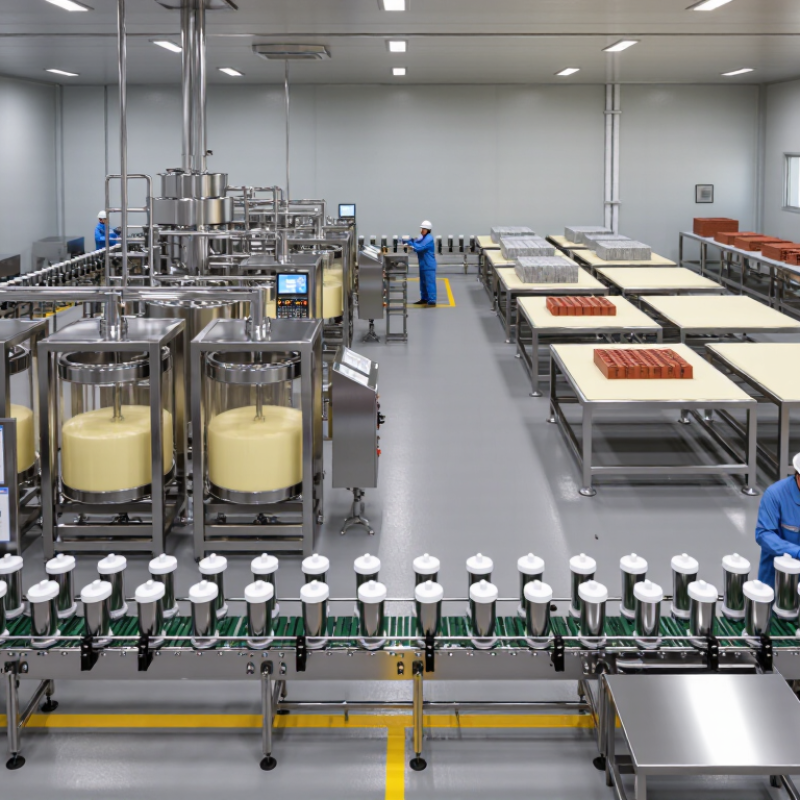
Manufacturing quality begins with stable raw-material ratios and accurate temperature control. Better factories test foam density, expansion yield, curing time, adhesion, and dimensional stability for every production batch. They also retain samples and record lot numbers. ISO 9001-based procedures can improve traceability, while EN 14351-1 and ASTM testing methods help buyers compare performance across markets. Small details matter. A poorly calibrated valve can create uneven foam flow and costly rework.
Customization is more practical when supported by engineering staff. Buyers may request different curing speeds, nozzle designs, can sizes, colors, or climate-specific formulas. Cold-weather performance deserves special attention, especially for shipments to northern regions. Factory trials should test application temperature, substrate moisture, and storage duration before mass production. Not every supplier handles this equally well. Some factories provide impressive laboratory sheets but limited field evidence. That gap requires reflection. Global buyers should review independent test reports, production records, packaging integrity, and complaint-response procedures before approving a supplier. Clear technical communication remains essential when standards, languages, and installation habits differ.
China PU Foam Sealant Manufacturing and Quality Reference
This chart summarizes representative technical ranges commonly reported in public product technical data sheets for one-component PU foam sealants. Values are industry reference ranges rather than company or brand rankings; buyers should verify the latest supplier TDS, test reports, and applicable standards.
Buyer perspective: Reliable manufacturers typically control density, curing time, yield, dimensional stability, and thermal performance through automated filling, batch testing, documented quality procedures, and application-specific customization.
Export Services, Compliance, and Buyer Selection Criteria
China’s leading PU foam sealant manufacturers are judged by export discipline, not factory size alone. The UNEP Global Status Report for Buildings and Construction 2024 reports that buildings consume about 32% of global energy and create 34% of global carbon emissions. This strengthens demand for reliable sealing and insulation products. Buyers should request thermal conductivity, yield, curing time, adhesion, and air-leakage test results.
Export service must include accurate SDS files, technical data sheets, batch traceability, HS classification, and export packaging suitable for humid sea transport. Compliance checks may involve REACH and CLP requirements for European shipments, GHS labeling, VOC limits, and project-specific fire standards. The OECD’s Due Diligence Guidance also supports documented supply-chain controls. A certificate alone is not enough. Verify its issuing laboratory and test method.
Selection should compare delivered cost, not only unit price. Check response time, minimum order quantity, private-label capability, shelf life, and replacement procedures. Ask for samples from different production batches. Experienced buyers also inspect carton seals and valve protection before loading. One weakness remains: online product claims can look precise but lack usable evidence. I would reject any supplier that avoids independent testing or cannot explain a failed batch. A cheaper offer may still work, but only when performance data, customs documents, and after-sales communication remain consistent.