China Top Biodegradable Non Woven Fabric Supplier?
Choosing China’s top Biodegradable Non Woven Fabric supplier requires more than comparing prices or attractive product photos. A reliable evaluation begins with material evidence. Buyers should examine fiber composition, production experience, biodegradation conditions, and independent test reports. A fabric made from PLA, cellulose, or other bio-based fibers may perform differently in medical packaging, agriculture, filtration, and shopping bags. The details matter.
Dr. Seshadri Ramkumar, a respected nonwovens researcher and professor, states, “A sustainable nonwoven must be judged across its entire life cycle, not by its label alone.” This principle offers a useful starting point. A dependable Chinese supplier should explain its raw-material sources, web-forming process, bonding method, thickness control, tensile strength, and moisture behavior. It should also provide clear documentation for relevant quality and environmental claims. Factory visits, sample testing, and production audits can reveal practical weaknesses that brochures often hide.
No supplier is perfect.
Some biodegradable fabrics require specific industrial composting conditions. Others may lose strength in humid storage or during transport. These limitations should be discussed openly, not softened by marketing language. A responsible supplier will help match the fabric to its actual application and disposal route. It will also maintain batch records and respond when test results differ from expectations. This introduction explores how to identify China’s leading Biodegradable Non Woven Fabric manufacturers through performance, transparency, technical support, and verifiable sustainability. The judgment may remain imperfect, but careful questions produce better decisions.
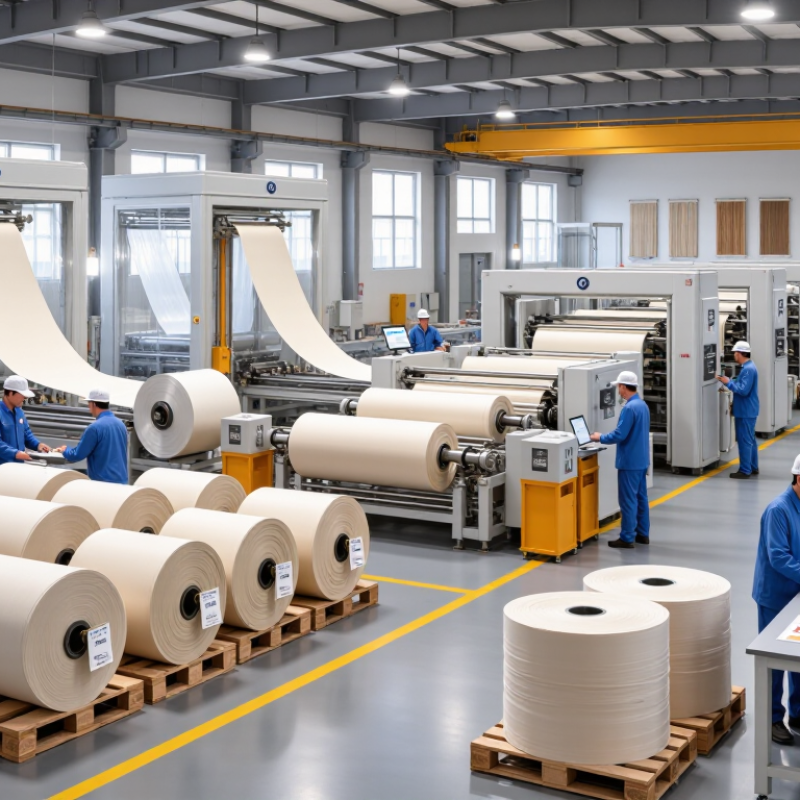
What Makes a Chinese Biodegradable Nonwoven Supplier “Top”?
A top Chinese biodegradable nonwoven supplier proves more than production capacity. It shows how material choices perform in real applications. Buyers should ask about fiber origin, polymer composition, and end-of-life conditions. “Biodegradable” is not a magic label. A credible supplier explains whether decomposition needs industrial composting, soil, heat, or moisture. It also provides test reports from recognized independent laboratories.
Factory experience appears in small details. Rolls should have even thickness, stable weight, clean edges, and consistent softness. During a sample review, check whether a 30-centimeter strip tears evenly after folding. Ask for batch records, incoming-material checks, and production tolerances. A strong technical team can adjust web formation, bonding, and moisture resistance without hiding trade-offs. However, no supplier is perfect. Some samples look excellent but change after storage. That deserves testing, not excuses.
Reliability also depends on communication and documentation. A top supplier shares clear specifications, realistic lead times, packaging details, and corrective-action records. It should support pilot orders before large-volume purchasing. Certifications matter, but their scope must match the actual product and facility. Verify certificate dates, test methods, and sample identities. Sustainable sourcing should include measurable data, not broad environmental language. The best partner may admit when a requested performance cannot be achieved with biodegradable material. That honesty protects product quality and buyer trust.
Which PLA, PHA, and Lyocell Fibers Achieve 90% Biodegradation in 180 Days?
China’s biodegradable non-woven fabric supply is expanding, but “90% biodegradation in 180 days” needs careful interpretation.
EN 13432 requires at least 90% conversion into carbon dioxide within 180 days under controlled industrial composting. It does not guarantee the same result in soil, seawater, or a home compost bin.
PLA fibers can meet this benchmark under industrial composting conditions. They usually need controlled heat, moisture, oxygen, and microbial activity. PHA fibers often show broader biodegradation potential, including soil and marine environments, but results vary by polymer structure and fabric thickness.
Lyocell is cellulose-based and can biodegrade efficiently, yet dyes, finishes, and blends may slow the process. The 2024 European Bioplastics market report shows continued growth in bioplastic production, but capacity growth does not equal verified end-of-life performance. Testing remains essential.
Sometimes, the label sounds better than the evidence.
Tips:
Ask suppliers for ISO 14855 or EN 13432 test reports, not general “eco” claims. Check the tested product, basis weight, additives, and temperature. A fiber may pass alone, while the finished non-woven fabric fails.
Request disintegration data, compost residue results, and laboratory accreditation.
Real procurement experience suggests one overlooked detail: certification scope matters more than promotional language.
How EN 13432, ASTM D6400, and ISO 14855 Verify Compostability
A reliable biodegradable non woven fabric supplier should explain compostability with test evidence, not attractive wording. EN 13432 evaluates packaging materials in controlled industrial composting. It checks biodegradation, disintegration, ecotoxicity, and heavy-metal limits. A fabric may break apart visually yet fail chemical or plant-growth requirements.
ASTM D6400 also addresses plastics and products designed for municipal or industrial composting facilities. Testing measures disintegration, aerobic biodegradation, and possible toxicity under defined conditions. The test environment includes controlled temperature, moisture, oxygen, and compost activity. These details matter because a backyard pile is usually colder and less consistent. Industrial composting is different.
ISO 14855 measures aerobic biodegradation by tracking carbon dioxide released during controlled composting. This gives laboratories a practical way to compare decomposition performance. However, one laboratory result cannot describe every finished fabric. Dyes, coatings, binders, stitching, and mixed fibers can change the outcome. Ask for reports covering the complete product, not only the raw fiber. Ask for certification scope, test dates, and laboratory competence. Small details matter.
A careful supplier also states the required disposal route. “Compostable” does not automatically mean home compostable or soil biodegradable. That distinction matters. In real production, specifications can drift between batches, so ongoing testing is valuable. No test is perfect. Honest documentation should show both compliance and limitations.
How to Compare 20–150 g/m² Fabrics by Strength, Airflow, and Absorption
China Top Biodegradable Non Woven Fabric Supplier?
When comparing 20–150 g/m² biodegradable non woven fabrics, start with the intended use. A 20–40 g/m² sheet feels light and flexible. It suits wrapping, liners, and breathable covers. Fabrics around 60–90 g/m² usually provide better handling strength. Heavier grades, from 100–150 g/m², resist tearing during transport and repeated use. Test both directions. Machine direction strength may differ sharply from cross direction strength.
Do not judge strength by thickness alone. Measure tensile strength, tear resistance, and wet performance under consistent conditions. Airflow also needs a controlled test. A loose web can pass more air, but excessive openness may weaken the sheet. Fine fibers improve uniformity, although they can reduce airflow after compression. Ask for test results at a stated pressure difference, not only a general “breathable” claim.
Absorption depends on fiber type, surface treatment, pore volume, and fabric weight. A 60 g/m² fabric may absorb quickly, while a 120 g/m² fabric may hold more liquid overall. These are different results. Request samples and record uptake time, retained liquid, and drying behavior. Check performance before and after light compression. Biodegradable claims also need documented material composition and testing scope. A perfect score is rare. Cost, softness, airflow, and strength often conflict, so the best supplier should explain those trade-offs clearly.
China Top Biodegradable Non Woven Fabric Supplier? - How to Compare 20–150 g/m² Fabrics by Strength, Airflow, and Absorption
| Basis Weight | Typical Biodegradable Construction | Fabric Thickness | Tensile Strength
Machine Direction | Tensile Strength
Cross Direction | Air Permeability
at 100 Pa | Liquid Absorption Capacity | Typical Applications | Performance Profile |
| 20 g/m² | Lightweight cellulose-based wetlaid or spunlace nonwoven | 0.12–0.20 mm | 8–18 N/5 cm | 3–10 N/5 cm | 1,200–2,200 L/m²/s | 7–10 g/g | Tea bags, lightweight wrapping, disposable dry wipes, filtration pre-layers | Very high airflow and low material consumption; limited tear and wet strength |
| 40 g/m² | Cellulose or viscose-cellulose biodegradable spunlace | 0.25–0.40 mm | 18–35 N/5 cm | 8–18 N/5 cm | 700–1,400 L/m²/s | 7–10 g/g | Facial wipes, light protective covers, seed-starting sheets, packaging inserts | Good breathability with improved handling strength |
| 60 g/m² | Wood-pulp and cellulose-fiber hydroentangled nonwoven | 0.40–0.60 mm | 30–55 N/5 cm | 14–28 N/5 cm | 450–900 L/m²/s | 7–11 g/g | Cleaning wipes, hygiene covers, agricultural protection, absorbent liners | Balanced strength, airflow, softness, and fluid uptake |
| 80 g/m² | High-loft cellulose spunlace or biodegradable fiber blend | 0.55–0.80 mm | 42–75 N/5 cm | 20–38 N/5 cm | 300–650 L/m²/s | 8–11 g/g | Heavy-duty wipes, cosmetic pads, medical drapes, absorbent packaging | Stronger and more absorbent while retaining useful air passage |
| 100 g/m² | Dense cellulose spunlace or cellulose-based biodegradable nonwoven | 0.70–1.00 mm | 55–95 N/5 cm | 25–48 N/5 cm | 220–500 L/m²/s | 8–11 g/g | Reusable-style cleaning cloths, medical underpads, filtration support layers | Higher load-bearing capacity and absorption; moderate airflow |
| 120 g/m² | Reinforced cellulose nonwoven with elevated basis weight | 0.85–1.20 mm | 70–115 N/5 cm | 32–58 N/5 cm | 160–400 L/m²/s | 8–11 g/g | Industrial wipes, mattress and furniture components, horticultural covers | High tensile performance and capacity; lower permeability than lighter grades |
| 150 g/m² | Heavyweight cellulose-based spunlace or biodegradable composite nonwoven | 1.00–1.50 mm | 85–140 N/5 cm | 40–70 N/5 cm | 120–320 L/m²/s | 8–11 g/g | Heavy-duty absorbent mats, protective packaging, upholstery and construction layers | Maximum strength and basis-weight efficiency; lowest airflow in this range |
Data interpretation: The values above are typical indicative ranges for untreated cellulose-based biodegradable nonwoven fabrics. Tensile strength is commonly assessed according to ISO 9073-3 or ASTM D5035, air permeability according to ISO 9237 or ASTM D737, and absorption capacity by liquid uptake per gram of dry fabric. Actual performance varies with fiber type, bonding method, pore structure, finish, moisture condition, and test laboratory.
How Certifications, MOQ, Lead Time, and LCA Data Reveal Supplier Reliability
China Top Biodegradable Non Woven Fabric Supplier?
Supplier reliability appears in details, not attractive claims. Ask for current certificates, issuing bodies, test methods, and product scope. ISO 9001 may support quality control, while ISO 14001 indicates environmental management. Neither certificate alone proves that every fabric roll biodegrades as promised. Request batch records and an independent laboratory report. Check whether the test covers the actual fiber blend, coating, dye, and thickness.
MOQ can reveal manufacturing discipline. A reasonable MOQ may reflect stable production planning, while an unusually low figure may indicate costly outsourcing. Ask how samples become commercial batches. Confirm whether color changes, width changes, or packaging changes restart the minimum order. Lead time should include sampling, approval, production, inspection, and shipping. A written schedule is useful. A backup plan matters more.
LCA data deserves careful reading. Request the functional unit, system boundary, electricity assumptions, transport distance, and end-of-life scenario. “Lower carbon” means little without those details. Prefer data reviewed by an independent professional, even when the result is inconvenient. I would also compare factory utility records with the LCA assumptions. They may not match perfectly. That gap deserves questions, not automatic rejection. During an audit, inspect roll labels, moisture control, storage conditions, and rejected-fabric records. Small inconsistencies often reveal more than polished presentations. Reliability is still a judgment, not a certificate.
China Top Biodegradable Non-Woven Fabric Supplier? Certification Review Cycles as a Reliability Signal
A longer certification cycle does not automatically prove better supplier performance. Buyers should also verify MOQ, production lead time, and product-specific LCA evidence.
The chart shows commonly published certificate validity cycles: OEKO-TEX STANDARD 100 and Global Recycled Standard certificates are generally valid for 12 months; ISO 14001 certification follows a typical three-year cycle; FSC Chain of Custody certification commonly follows a five-year cycle with surveillance audits. Certificate validity is only one screening factor—MOQ, lead time consistency, traceability, and a product-specific LCA should be confirmed directly with the supplier.
Sources: OEKO-TEX STANDARD 100 · Textile Exchange Standards · ISO 14001 · FSC Chain of Custody