- Proudly Made in the USA
Choosing a Stone Hammer Crusher in 2026 requires more than comparing motor power or advertised capacity. The right machine must match your rock type, feed size, moisture level, and required product grading. A crusher handling dry limestone may perform poorly with sticky clay or abrasive granite. Small details matter. Experienced operators usually inspect the rotor, hammer arrangement, lining thickness, and discharge opening before discussing price. These parts directly affect wear, vibration, maintenance time, and final output.
This guide introduces practical criteria for evaluating a Stone Hammer Crusher with greater confidence. It considers crushing performance, energy use, safety features, spare-part availability, and supplier support. Reliable manufacturers should provide technical drawings, tested specifications, installation guidance, and clear warranty terms. Independent inspection and site-based testing are also valuable, especially when production conditions differ from laboratory results. A quoted capacity may look impressive, but actual performance can fall when feed material is wet, oversized, or unevenly supplied. That limitation is easy to overlook. It deserves honest attention.
The selection process should also reflect local operating conditions and applicable equipment standards. Check guarding, emergency stops, dust control, noise exposure, and maintenance access before purchase. A lower initial cost is not always economical if hammers require frequent replacement or downtime interrupts production. In practice, no single model suits every quarry, recycling plant, or aggregate line. Careful comparison, documented evidence, and feedback from experienced users create a more dependable decision. Some assumptions may still need revision after a site trial. That is normal.
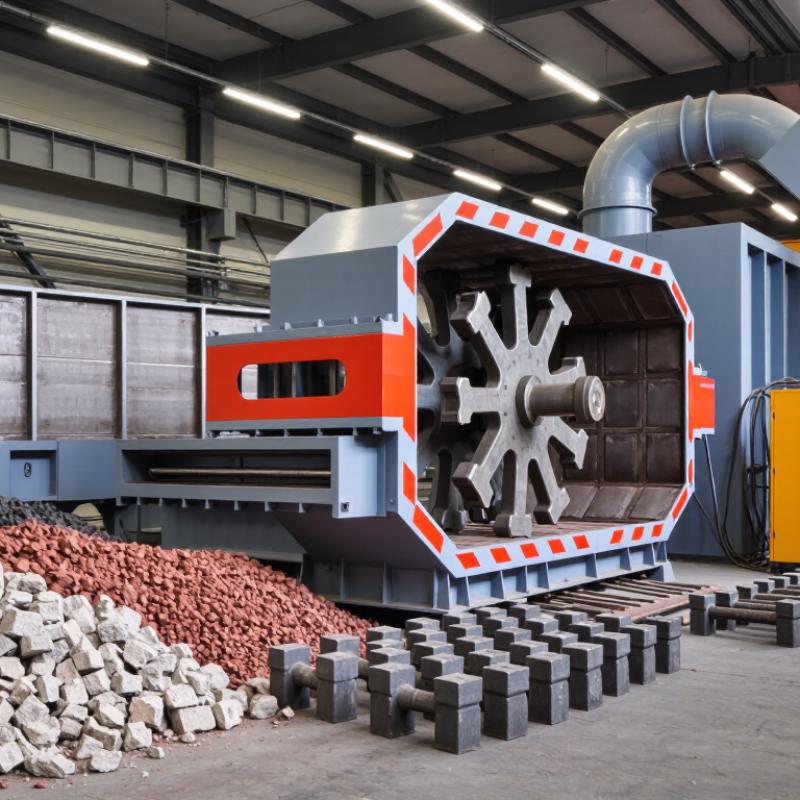
Choosing a stone hammer crusher starts with the material, not the machine’s appearance. Record the rock type, feed size, moisture, abrasiveness, and required product size. Granite and limestone behave differently under impact. Hard, abrasive stone can accelerate hammer and liner wear. Wet or clay-rich feed may clog the crushing chamber. That detail is easy to miss on a dry test sample. Measure it during normal quarry conditions.
Your production target also needs a clear definition. Estimate tonnes per hour, daily running time, and acceptable fines. A crusher producing a beautiful sample may still fail your schedule. Check the largest feed lump and the desired discharge range. Ask for test data using material close to yours. Independent inspection records are more useful than broad performance claims. Confirm motor power, rotor speed, access space, dust control, and guarding before purchase. These checks reflect practical field experience, not showroom optimism.
Tips: Take a representative material sample, including dusty and damp portions. Keep a wear log. Compare hammer life, not only output. Ask how quickly worn parts can be inspected and replaced. If the feed changes seasonally, size the solution for the difficult period. Do not rely on a single laboratory result. Real conditions are messier. Recheck assumptions after commissioning; the first setting is rarely perfect. Verify emergency stops, guards, and maintenance access before regular operation.

How to Choose a Stone Hammer Crusher in 2026?
Compare Hammer Crusher Types and Key Performance Parameters
Choosing a stone hammer crusher starts with the rock, not the advertised capacity. Soft limestone, medium-hard granite, and abrasive river stone require different crushing strategies. A reversible hammer crusher suits balanced wear and repeated operation. A heavy hammer crusher handles larger feed and delivers strong reduction in one stage. Ring hammer designs can provide controlled sizing, but they need careful inspection of the grate and discharge area.
Key parameters should match the complete production line. Check maximum feed size, target output size, hourly capacity, rotor speed, motor power, and reduction ratio. Moisture also matters. Wet stone may block grates and reduce efficiency. High silica content can accelerate hammer and liner wear. Ask for test data using material with similar hardness and moisture.
Some choices fail.
Do not compare capacity figures without checking discharge size. A machine producing 100 tonnes per hour at a coarse setting may perform differently at fine output. In practical evaluations, operators should monitor vibration, bearing temperature, product grading, and power consumption. A lower-speed rotor may reduce wear, while a faster rotor can improve shaping and throughput. The trade-off is real. Spare-part access, adjustment time, dust control, and safety interlocks also influence ownership cost. A clean datasheet can still hide poor site compatibility, so a small material trial is worth arranging before purchase.
| Crusher Type | Typical Application | Recommended Feed Size | Typical Capacity Range | Typical Discharge Size | Main Selection Considerations |
|---|---|---|---|---|---|
| Reversible Hammer Crusher | Medium and fine crushing of limestone, gypsum, coal, and other relatively soft to medium-hard materials | Up to approximately 300–500 mm, depending on model and material | Approximately 20–250 t/h | About 3–25 mm, depending on grate setting and rotor speed | Useful when balanced hammer wear and reduced maintenance downtime are important; requires controlled moisture and limited abrasive content |
| Heavy-Duty Hammer Crusher | Primary or secondary crushing of limestone, marl, coal, and other low-to-medium abrasiveness materials | Approximately 300–800 mm | Approximately 50–600 t/h | About 10–80 mm | Choose for larger feed lumps and higher throughput; verify rotor strength, housing design, and foundation requirements |
| Single-Stage Hammer Crusher | Single-stage crushing in cement, aggregate, and building-material applications | Approximately 500–1,200 mm, depending on machine design | Approximately 100–1,500 t/h | About 10–50 mm | Can combine primary and secondary reduction; best suited to uniform, low-abrasion feed with stable moisture content |
| Ring Hammer Crusher | Coal crushing and preparation of friable materials | Approximately 200–500 mm | Approximately 50–700 t/h | About 6–30 mm | Provides impact and attrition crushing with relatively good control of coal sizing; not intended for highly abrasive rock |
| Fine Hammer Crusher | Fine crushing of limestone, gypsum, brick, glass, and other brittle materials | Usually below 100–200 mm | Approximately 10–300 t/h | About 2–10 mm | Suitable where a finer product is required; check screen or grate blockage risk when feed contains clay or excessive moisture |
| Hammer Mill | Fine size reduction of soft minerals, biomass, agricultural materials, and other friable feedstocks | Usually below 50–100 mm | Approximately 1–100 t/h | About 0.5–10 mm | Offers high reduction ratios and adjustable screens; performance depends strongly on screen aperture, feed moisture, and hammer condition |
| Performance Parameter | Typical Range or Target | Why It Matters | How to Evaluate It |
|---|---|---|---|
| Material Hardness | Best performance generally occurs with soft to medium-hard materials; many applications fall below approximately 150 MPa compressive strength | Harder rock increases impact energy demand, wear, vibration, and the risk of component damage | Obtain laboratory strength data or representative samples before selecting a hammer crusher for hard stone |
| Abrasiveness | Low to moderate abrasiveness is generally preferred | Quartz and other abrasive minerals can rapidly wear hammers, liners, grate bars, and rotor components | Review silica content, abrasion index, expected wear rate, and the cost of replacement parts |
| Feed Moisture | Preferably below approximately 8–10% for many conventional hammer-crushing applications | Wet or sticky feed can cause clogging, reduced capacity, uneven discharge, and increased power consumption | Confirm moisture variation throughout the year and consider pre-screening, drying, or a different crusher type if needed |
| Feed Lump Size | Commonly 100–1,200 mm, depending on crusher type and rotor size | Oversized feed can overload the crusher and create excessive shock loads | Match the largest feed dimension to the documented inlet opening and maintain a controlled feed rate |
| Reduction Ratio | Often approximately 10:1 to 30:1; actual results depend on feed and discharge settings | A high reduction ratio may reduce the number of crushing stages but can increase fines and wear | Compare the required product size with the crusher's tested product gradation rather than using ratio alone |
| Capacity | Approximately 1–1,500 t/h across different hammer-crusher designs | Capacity determines whether the machine can meet production targets without continuous overloading | Use the manufacturer's rated range only as a reference; correct for material density, moisture, feed size, and product size |
| Rotor Speed | Commonly approximately 500–3,000 rpm, depending on machine size and duty | Higher speed can improve fine crushing but may increase energy use, vibration, and wear | Select a speed range that matches the required product size and verify rotor balance and guarding provisions |
| Installed Power | Approximately 15–1,600 kW across small to large industrial machines | Insufficient power can reduce throughput and cause overload trips; excess power may increase capital and operating cost | Estimate power from required capacity, material properties, reduction ratio, and operating hours |
| Product Gradation | Frequently controlled from approximately 3 mm to 80 mm using grates, screens, or discharge settings | Product size and fines content affect downstream screening, conveying, mixing, and final product quality | Request a complete particle-size distribution, not only a single maximum particle-size value |
| Wear-Part Service Life | Highly variable; commonly measured in operating hours or tonnes processed | Wear-part consumption often has a major effect on total cost of ownership | Compare hammer material, reversible design, liner replacement time, local availability, and maintenance access |
| Energy Consumption | Project-specific; often evaluated as kWh per tonne of finished product | Energy efficiency affects operating cost and may be more important than rated motor power | Compare tested specific energy at the same feed size, moisture, capacity, and product specification |
| Dust and Noise Control | Requires enclosure, extraction, transfer-point control, and suitable hearing protection where applicable | Impact crushing can generate airborne dust and high noise levels | Include dust collection, acoustic treatment, guarding, inspection doors, and lockout procedures in the plant design |
Capacity should match your real feed conditions, not only the catalog rating. Measure the stone size, moisture, hardness, and required product size before comparing machines. A crusher rated for 30 tons per hour may deliver less with wet, sticky feed. Leave practical operating room instead of running at maximum load. Stable output matters more than an impressive peak number.
Power use deserves a direct test. Check the motor’s rated kilowatts, average load, and energy consumption per ton. A larger motor does not always mean better crushing performance. Ask for test data using material similar to yours. Install an electricity meter if possible.
I once trusted a supplier’s theoretical figure, and the actual energy cost was noticeably higher. That estimate was too optimistic.
Wear parts can decide the true ownership cost. Inspect hammer material, rotor protection, grate design, and replacement time. Hard, abrasive stone may shorten hammer life quickly. Ask how many operating hours the parts usually provide under comparable conditions. Keep critical spares near the maintenance area. Record every replacement and divide its cost by processed tons. Also calculate labor, downtime, lubrication, and electricity. A cheap hammer may wear unevenly and damage the rotor. That mistake is expensive. Make sure the inspection doors are accessible, because difficult access turns routine maintenance into lost production.
Safety should be checked before capacity, price, or appearance. The ILO estimated 2.93 million work-related deaths globally in 2019. Mining machinery deserves serious attention. Look for enclosed drive guards, emergency-stop cables, lockout points, stable access platforms, and clear maintenance instructions. Ask for measured noise and dust data, not vague promises. A practical site test should include empty running, loaded crushing, and shutdown response.
Product quality depends on more than steel thickness. Inspect weld consistency, rotor balance, bearing protection, and the hardness of wear parts. Request inspection records, load-test results, and traceable material certificates. The ISO Survey 2023 recorded more than one million ISO 9001 certificates worldwide. However, certification alone does not prove a crusher will survive abrasive stone. That is an uncomfortable limitation. Watch the machine run.
Supplier reliability is often revealed after the sale. Compare documented delivery times, spare-parts availability, technician response times, and warranty exclusions. The World Bank’s 2023 Logistics Performance Index shows major differences between countries in shipment reliability and supply-chain speed. Therefore, ask for regional service contacts and realistic replacement-part lead times. Contact recent users, if possible. One supplier reference is not enough. A polished quotation can still hide slow support. Keep written records of every promise.
How to Choose a Stone Hammer Crusher in 2026?
Select the Best Stone Hammer Crusher for Your 2026 Project
Your project starts with the feed material, not the machine catalog. Limestone, sandstone, and recycled concrete behave differently under impact. The USGS Mineral Commodity Summaries 2025 estimates recent U.S. crushed-stone production at roughly 1.5 billion metric tons annually. That scale shows why stable output and wear control matter. Test your rock’s hardness, moisture, maximum size, and abrasiveness before comparing models.
Check the crusher’s rated capacity against your real operating target. A machine producing 120 tons per hour may perform differently with wet, uneven feed. The Energy Institute’s Statistical Review of World Energy 2024 reports continuing pressure on industrial energy efficiency. Therefore, compare power consumption per ton, not motor size alone. Ask for test data from similar stone. Small details count. Rotor balance, access doors, liner thickness, and dust-control connections affect daily productivity.
Safety and maintenance deserve equal attention. Review guarding, emergency stops, inspection access, and spare-part availability with your site team. The U.S. Mine Safety and Health Administration repeatedly identifies machinery maintenance and moving equipment as major workplace concerns. Do not select a crusher only because its initial price looks low. I have seen theoretical capacity hide frequent blockages and expensive downtime. A slower machine may suit your feed better. Recheck the decision using measured site data, because laboratory assumptions can be imperfect.
Representative Mohs hardness of common stones for preliminary crusher selection
Limestone is generally easier to process with a hammer crusher, while granite and basalt are harder and more abrasive. Confirm feed size, moisture, abrasiveness, required output size, capacity, and wear-part costs before making the final 2026 equipment selection.
Whether you’re looking for fire-rated walls, doors, openings, floors or a specialty service, we have the solution for you. With over 40 years of experience in testing, innovating, and providing technologically advanced fire-rated glass and framing products, we deliver unyielding performance and quality at a competitive price.
