How to Choose the Right Fireproof Glass for Your Needs?
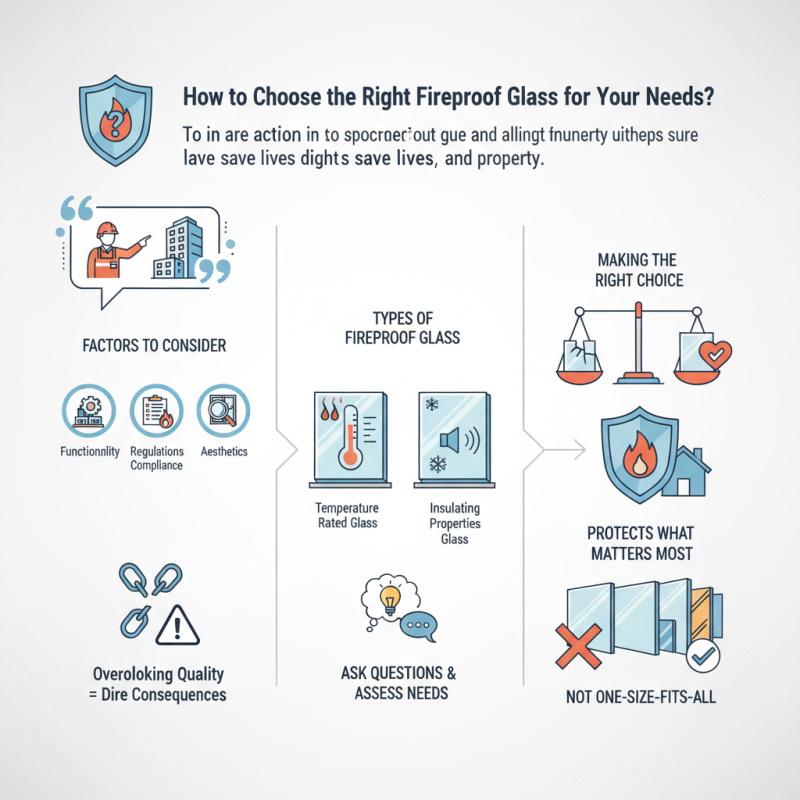
Choosing the right fireproof glass is crucial for safety in various applications. John Smith, a leading expert in fire protection materials, emphasizes, “The right fireproof glass can save lives and property.”
When applying fireproof glass, several factors come into play. It's not just about aesthetics. Functionality and compliance with fire safety regulations are vital. Many businesses overlook the benefits of quality glass. This can lead to dire consequences.
Understanding different types of fireproof glass is necessary. Some are rated for specific temperatures. Others have better insulating properties. Be prepared to ask questions and assess your needs. Evaluating options may uncover flaws in your initial perception. Fireproof glass isn’t a one-size-fits-all solution. Choosing wisely protects what matters most.
Understanding Fireproof Glass: Types and Classifications
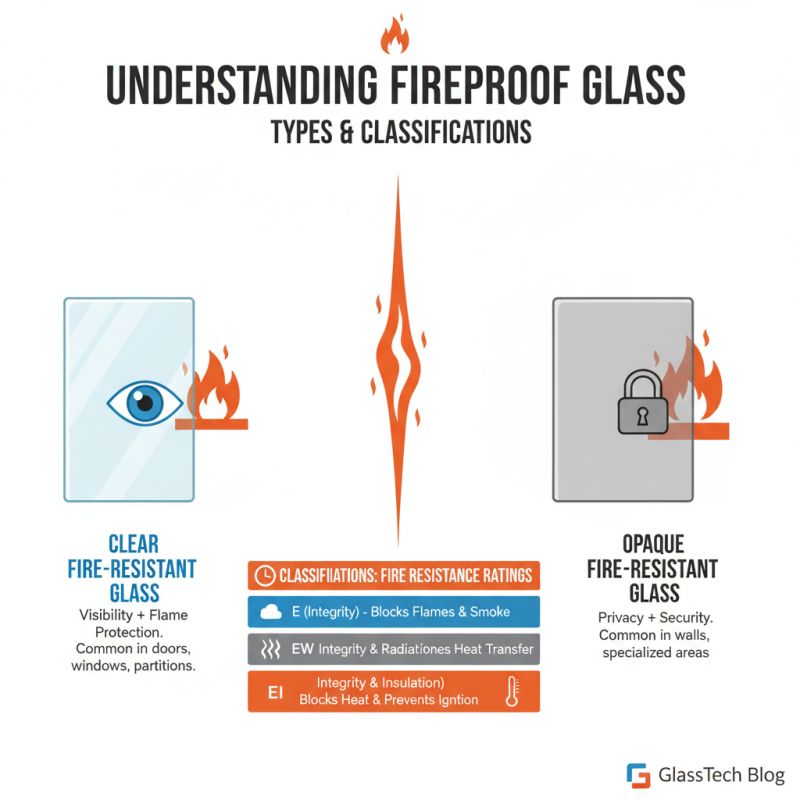
When selecting fireproof glass, it's crucial to understand its types and classifications. Fireproof glass is categorized based on its fire resistance ratings. Two major types are clear and opaque fire-resistant glass. Clear glass provides visibility while protecting against flames. Opaque glass, however, offers privacy and security.
The classification often follows the ASTM E119 standard, which assesses the fire resistance of building materials. According to a recent report by the National Fire Protection Association, the demand for fire-rated glass has increased by 25% in commercial buildings over the last five years. This growth is due to stricter building codes and regulations.
Another key aspect involves the temperature rise during a fire. Many fireproof glasses can withstand temperatures above 1,000 degrees Fahrenheit for significant periods. However, not all fire glass performs the same under stress. Some fail after only 30 minutes, while others endure for up to 90 minutes or more. This inconsistency highlights the need for careful consideration when choosing fireproof glass for specific applications. It's important to reflect on your project requirements and select accordingly.
Evaluating Fire Resistance Ratings for Your Specific Needs
When selecting fireproof glass, understanding fire resistance ratings is crucial. These ratings indicate the material's ability to withstand fire exposure. Common ratings include 20, 45, 60, and 90 minutes. This reflects how long the glass can maintain its integrity during a fire. A report from the Fire Protection Research Foundation states that properly rated materials can significantly delay fire spread.
Different applications require different ratings. For instance, residential buildings may use glass with a 20-minute rating. On the other hand, commercial spaces might require 60-minute rated glass for enhanced safety. Experts from the National Fire Protection Association emphasize that all fire-rated glass must comply with local building codes. Ignoring these can lead to devastating consequences.
Choosing the right fireproof glass isn't straightforward. Factors such as location and building use must be considered. A study from the Building Research Establishment suggests that selecting an inadequate rating can create vulnerabilities. Sometimes, project specifications demand higher ratings than necessary, increasing costs without real benefit. This complexity requires careful evaluation and thoughtful reflection on actual needs.
Fire Resistance Ratings of Different Fireproof Glass Types
Key Factors to Consider When Selecting Fireproof Glass
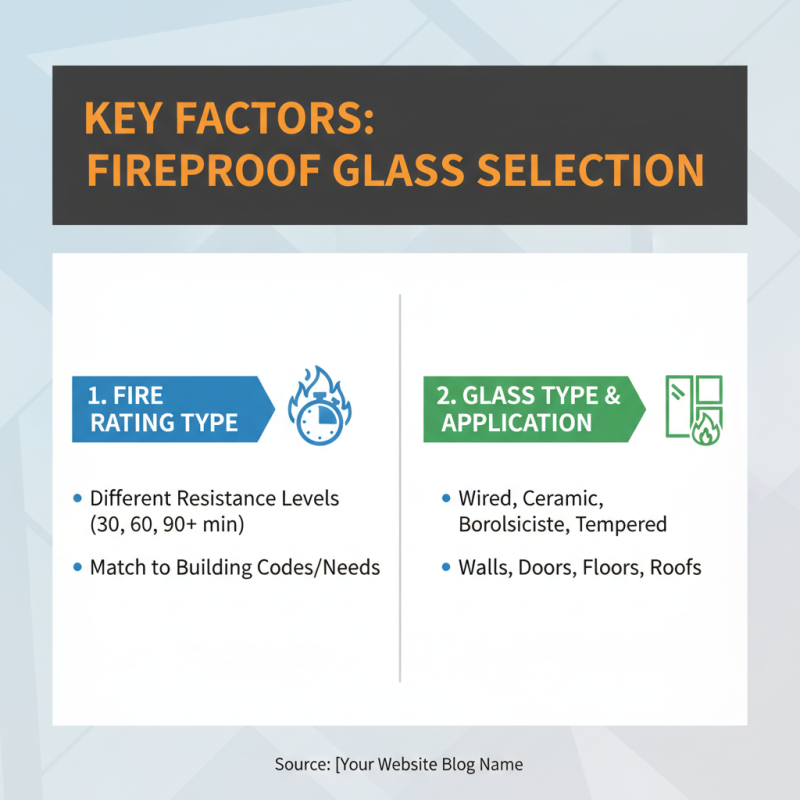
When choosing fireproof glass, consider several key factors. The first is the type of fire rating. Different glass types have varying fire-resistance levels. Knowing these ratings helps in selecting the right material for your specific need. For example, some glasses can withstand flames for an hour, while others may only last 30 minutes.
Another important aspect is the intended application. Think about where the glass will be installed. Is it a window, a door, or a partition? Each location has unique requirements. You may also want to evaluate the glass thickness. Thicker glass generally provides better protection, but can be heavier and more expensive.
Finally, aesthetic considerations might matter too. Fireproof glass comes in various finishes and styles. You want the glass to match the overall design of your space. However, striking a balance between function and beauty can be challenging. It's important to prioritize safety while also being mindful of your design vision. Reflect on these factors carefully to make the best choice.
Installation and Compliance: Ensuring Safety Standards
When selecting fireproof glass, installation and compliance are critical. Correct installation ensures the glass performs under fire conditions. It is not enough to just choose the right type of glass. The installation team must understand specific guidelines and safety standards. Misunderstandings can lead to significant safety risks. For instance, gaps in installation may undermine the glass's effectiveness.
Compliance with local fire codes is essential. These regulations dictate the specifications for fireproof glass in various buildings. Ignoring these can result in penalties or, worse, unsafe environments. Each project should begin with a thorough review of applicable codes. A good approach is to consult local fire marshals or building inspectors. They can provide insights that help avoid costly mistakes.
It's easy to assume that fireproof glass will always perform. Yet, it can fail if not installed correctly. Regular inspections play a crucial role in maintaining safety. Over time, seals may deteriorate, and glass may become susceptible. Ignoring these factors could be a grave error. Such reflections can guide more informed choices in the future.
How to Choose the Right Fireproof Glass for Your Needs? - Installation and Compliance: Ensuring Safety Standards
| Type of Fireproof Glass |
Fire Rating |
Thickness |
Application |
Compliance Standards |
| Laminated Fireproof Glass |
30 to 120 minutes |
6 to 12 mm |
Windows, Doors |
ASTM E119, NFPA 80 |
| Polycarbonate Fireproof Glass |
30 minutes |
6 to 10 mm |
Building Facades |
BS 476, EN 13501-2 |
| Ceramic Fireproof Glass |
60 to 180 minutes |
4 to 10 mm |
Fire-rated Openings |
UL 9, ASTM E2074 |
| Wire Glass |
20 to 45 minutes |
3 to 6 mm |
Interior Partition Walls |
ANSI Z97.1, CPSC 16 CFR 1201 |
Maintenance Tips for Long-lasting Fireproof Glass Performance
Maintaining fireproof glass is essential for ensuring its longevity and effectiveness. Regular inspection helps identify issues early. Look for cracks or discoloration. These can indicate potential failure under extreme conditions. According to industry reports, nearly 15% of fireproof glass failures happen due to neglect.
One key maintenance tip is to keep the glass clean. Dust and grime can obscure visibility and trap heat. Use a soft cloth and a gentle cleaner. Avoid abrasive materials that could scratch the surface. Studies suggest that regular cleaning can extend lifespan by up to 20%.
Temperature fluctuations can affect the integrity of fireproof glass. When exposed to high heat, it can expand. This expansion may not always be uniform, leading to stress fractures. Monitor environmental conditions, especially in extreme climates. Consider installing protective barriers to reduce direct heat exposure. These small steps can make a significant difference.