How to Choose the Best Construction Truck for Your Needs?
Choosing the best Construction Truck can be a daunting task. With numerous options on the market, it’s crucial to make an informed decision. Industry expert John Smith states, “The right construction truck is a partner in efficiency.” Understanding your specific needs is essential for selecting the optimum vehicle.
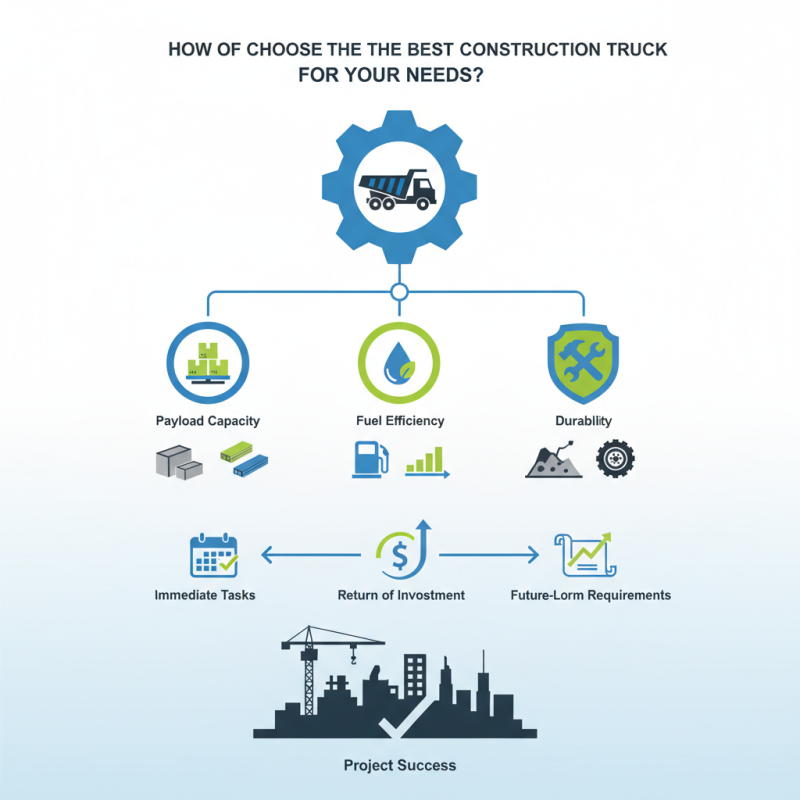
When evaluating options, consider payload capacity, fuel efficiency, and durability. A construction truck must withstand harsh environments while delivering reliable performance. Many contractors overlook these factors, resulting in poor investments. Always assess the potential return on investment before purchasing.
Additionally, it’s wise to reflect on the long-term requirements of your projects. Some trucks may seem perfect for immediate tasks but may not serve future needs. This foresight can prevent unnecessary costs and operational delays. In the ever-evolving construction sector, the right construction truck can significantly impact overall project success.
Understanding Your Construction Needs and Requirements
Choosing the right construction truck starts with understanding your specific needs. Consider the type of projects you handle most often. Each job may require different capabilities, such as load capacity or terrain handling. If your work involves heavy materials, a truck with a higher payload capacity is essential. Reflect on how often you haul large equipment or materials.
Next, evaluate the environments where you'll operate. Are you mostly on smooth highways or rugged terrains? Different trucks perform better in distinct conditions. For example, all-wheel-drive trucks excel on rough surfaces, while flatbeds are beneficial for transporting large items. Assessing these factors will help you narrow down your options effectively.
It’s important to consider your budget and maintenance costs as well. Some trucks have higher upfront costs but offer better durability. Think about long-term expenses like fuel efficiency and repair needs. Sometimes, saving money initially can lead to higher costs down the road. Your choice should balance immediate needs with future requirements. Take your time to reflect on what will truly serve your business best.
Evaluating Different Types of Construction Trucks Available
When evaluating different types of construction trucks, it’s essential to consider your specific needs. Different projects require different capabilities. For instance, if you’re often working on rough terrain, a robust model with all-wheel drive is crucial. Alternatively, if speed and efficiency on paved roads are essential, consider a truck designed for that environment.
Payload capacity is another critical factor. Trucks vary significantly in how much they can carry. A medium-duty truck might suffice for smaller tasks, while heavy-duty options are better for transporting large loads. Be mindful of weight restrictions and local regulations. These details can impact both performance and safety.
Specialty trucks, like dump or flatbed models, serve unique functions. A dump truck is excellent for hauling materials directly to sites. Flatbeds offer flexibility for various cargo. Each type comes with its own advantages and challenges. Understanding the specifics can lead to better choices. Reflect on past experiences. What worked well? What didn’t? This reflection can guide your decision-making process for future projects.
Analyzing Payload Capacity, Size, and Maneuverability
When choosing a construction truck, payload capacity, size, and maneuverability are critical factors. A truck's payload capacity often dictates how much material can be carried. For example, heavy-duty trucks typically support loads exceeding 2,000 pounds. Analyzing local job sites can help determine the necessary capacity for specific tasks. It’s essential to align a truck's specs with the anticipated demands of your projects.
Size plays a significant role in navigation and accessibility. A larger truck may deliver more materials but can struggle in tight spaces. Data from industry reports suggest that 70% of construction workers face challenges accessing narrower job sites. Hence, selecting a truck that balances size and capacity is important. A compact truck can easily maneuver but may limit cargo load. It’s crucial to consider the types of jobs you frequently undertake.
Maneuverability is often underestimated but can affect productivity. A truck with a tighter turn radius increases efficiency on crowded sites. For instance, a study found that trucks with better maneuverability can save up to 30% of operational time in certain environments. Assessing how often your work occurs in crowded areas can guide your choice. Each project is unique, and the right truck must adapt to varying requirements. Adjusting expectations based on site-specific challenges is essential for optimal performance.
Considering Budget, Maintenance, and Fuel Efficiency
When selecting a construction truck, budget is paramount. Determine how much you can afford without overspending. Set aside funds for unexpected expenses, like repairs or upgrades. A solid plan helps prevent financial strain later.
Maintenance is another crucial factor. Regular upkeep ensures longevity. Look for trucks that are easy to service. High maintenance costs can drastically impact your budget. Invest time in researching common issues for different models.
Fuel efficiency plays a vital role in operational costs. Trucks with better mileage will save money over time. While the initial purchase price may differ, consider long-term savings. Small differences in fuel consumption can add up significantly. Analyze your daily routes and payload to choose wisely. Balancing these elements is essential for making an informed decision.
Comparison of Construction Truck Features
Researching Brands and Reviews for Reliability and Performance
When selecting a construction truck, researching brands and reading reviews is essential. You need to focus on reliability and performance. Evaluating different brands can provide insights into their durability and cost-effectiveness. Many users share their experiences online. They detail both positive and negative aspects of their trucks. This firsthand information is invaluable.
Consider the common issues mentioned in reviews. Some users report frequent breakdowns, while others highlight excellent towing capacity. These details can shape your decision. Reliability often stems from the manufacturer’s reputation. Look for brands known for longevity in their vehicles. Online forums and review sites can be great resources for this kind of information.
Expert opinions add another layer of depth. Industry specialists often test vehicles and provide performance ratings. They compare different models and provide analysis. This can help you understand which trucks may suit your specific needs best. Pay attention to trucks that meet safety and efficiency standards as well. Reliable vehicles can potentially save you money over time.
How to Choose the Best Construction Truck for Your Needs?
| Dimension | Value | Comments |
| Payload Capacity | 12,000 lbs | Suitable for heavy materials |
| Engine Power | 350 HP | High performance in tough conditions |
| Fuel Efficiency | 10 MPG | Average for heavy-duty trucks |
| Towing Capacity | 15,000 lbs | Ideal for trailers and equipment |
| Warranty Period | 3 years or 36,000 miles | Comprehensive coverage |