How to Choose Heat Resistant Rubber Hose in 2026?
Choosing a Heat Resistant Rubber Hose in 2026 is a materials decision, not a color or price comparison. The right hose must handle the real temperature at its surface, the fluid inside, and the pressure pulses created by the equipment. A hose near a furnace may face radiant heat, while one beside an engine may also meet oil, vibration, and tight bends. Small differences matter.
As hose-design engineer Mara Chen puts it, “A hose is only heat resistant in the conditions it was designed to meet.” That principle should guide every specification. Check the manufacturer’s continuous and intermittent temperature limits, then compare them with measured operating conditions. Review the inner-tube compound, reinforcement, cover, fittings, and bend radius as one system. A high temperature rating alone does not prove compatibility with hot oil, steam, or cleaning chemicals.
Look closely at the details. Is the hose exposed to heat for minutes or all day? Does it flex while hot? Will a clamp crush the cover? These questions help narrow choices before installation. Still, a catalog rating is not a substitute for application-specific advice, and field conditions can be messier than a test sheet suggests. That deserves a second look. This guide explains how to compare materials, ratings, construction, and service life, so you can choose a hose suited to the job—not just the headline number.
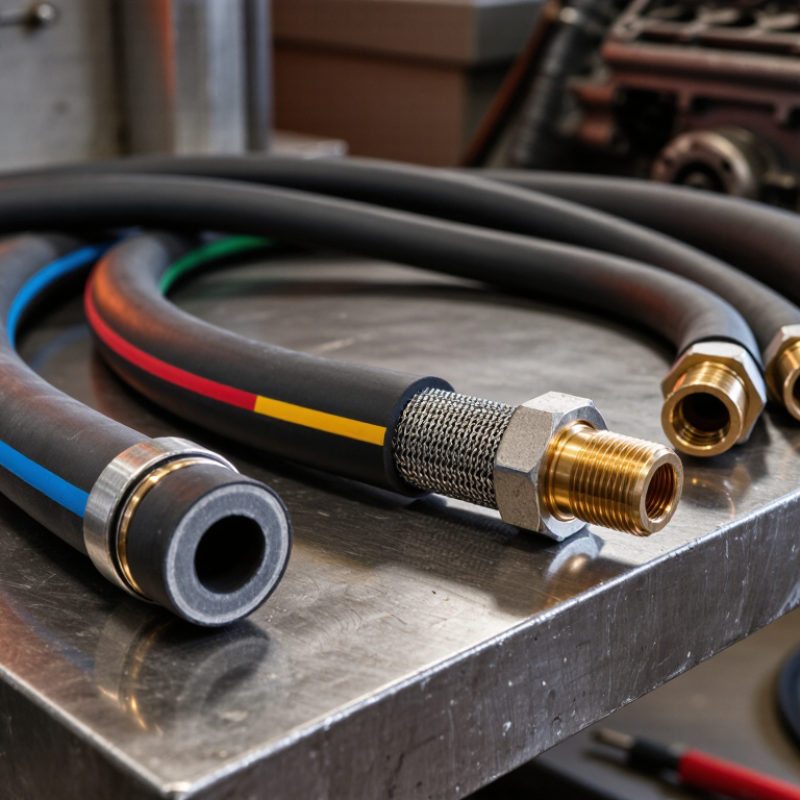
Define the Operating Conditions for a Heat-Resistant Rubber Hose
Before selecting a heat-resistant rubber hose, record the actual conditions at the hose—not just the equipment’s rated temperature. Measure continuous and peak fluid temperatures, pressure, exposure time, and nearby radiant heat. Note the fluid’s composition too; oil, coolant, steam, and cleaning chemicals can affect rubber differently. Include start-up surges and pressure pulses. They matter.
ASTM D573 evaluates rubber changes after accelerated oven aging. A commonly used condition is 70°C for 168 hours, but that test result is not a hose’s safe operating rating. Check the manufacturer’s documented continuous and intermittent temperature limits against your measured conditions. ISO 6803 provides a method for testing hydraulic hose assemblies under pressure impulses, a useful reference where cycling occurs. Also record the minimum bend radius and movement: a hose routed tightly beside a hot engine may face both heat and mechanical strain. Easy to overlook. I would leave margin below the published limits, especially when temperatures fluctuate or measurements are uncertain. One honest limitation: a short test cannot perfectly reproduce years of field exposure.
Compare Rubber Compounds for Heat, Chemicals, and Aging
Choosing a heat-resistant hose means comparing the whole compound, not just its maximum temperature. As practical screening ranges, EPDM often suits hot water and steam near 150°C, while silicone can serve around 200°C. FKM is often selected for heat plus oils and fuels, also near 200°C. These are typical limits, not guarantees; reinforcement, pressure, and continuous exposure change performance. Real hoses are messier.
Chemical compatibility can overturn a temperature-based choice. EPDM generally resists water-based fluids but performs poorly with many petroleum oils. Silicone handles wide temperature swings, yet some oils and solvents can swell or weaken it. FKM often tolerates oils and fuels better, but hot water or steam may rule it out. Check the exact fluid, concentration, and cleaning cycle against compound data.
Ask suppliers for aging and immersion results, not a broad “high-temperature” claim. ASTM D573 measures rubber property changes after oven aging; ISO 1817 measures changes after liquid exposure. Compare hardness, tensile strength, elongation, and volume change before and after testing. Those results help expose trade-offs. A hose that survives heat may still stiffen, crack, or leak after chemical contact. I would verify the actual operating cycle, because a neat lab test can miss it.
Match Hose Construction to Pressure and Flexibility Requirements
Match construction to both pressure and movement. A hose may tolerate high heat yet fail early under pressure pulses or repeated bending. For lower-pressure hot air, reinforced fabric construction can stay light and flexible. Steam, oil, or abrasive material may need a different tube and cover. Check the media, temperature range, working pressure, and minimum bend radius together. Not separately. A tight bend behind a furnace can flatten the bore and concentrate stress near the fitting.
For hydraulic service, ISO 7751:2023 gives pressure-test ratios for hose assemblies; the applicable category matters, and a 4:1 burst-to-working-pressure ratio is commonly specified for hydraulic hose. Treat that as a selection check, not permission to operate near burst pressure. Match reinforcement to peak pressure and pulsation: braided layers suit many flexible runs, while spiral reinforcement may suit higher-pressure duty. Verify the hose maker’s stated continuous temperature, not just its short-term peak. Then check the assembly rating, since fittings can limit the whole line. A neat specification sheet can still miss real routing conditions. Measure the installed bend radius, and inspect for kinks, rubbing, and heat-soaked sections. My first choice may look right on paper, yet a few centimetres of clearance can change service life.
Check Temperature Ratings, Standards, and Test Data
A heat-resistant hose is not defined by one temperature number. Check whether the rating applies to continuous service or brief peaks, and compare it with the actual fluid and surrounding air temperatures. A hose carrying hot oil beside a furnace may face heat from two directions. That matters. Leave a sensible margin for startup spikes, cleaning cycles, and unexpected pauses; operating continuously at the stated limit can shorten service life.
Review the applicable standards for the hose construction and intended use, then confirm their current editions with the supplier or test laboratory. A standards reference alone is not proof that a particular assembly was tested. Ask for documentation identifying the hose type, test method, temperature range, and acceptance criteria. Numbers need context. A rating without test conditions is difficult to evaluate.
Look for test data covering more than heat exposure. Pressure retention after thermal aging, flexibility, leakage, and repeated temperature cycles can reveal weaknesses that a single high-temperature test misses. Check whether the test used the same reinforcement, fittings, and working pressure as your planned installation. Small differences matter. If results show only a short laboratory exposure, treat them cautiously rather than assuming years of field performance. Selection is rarely perfect; record the assumptions and review them when operating conditions change.
Confirm Compatibility, Installation Limits, and Maintenance Needs
How to Choose Heat Resistant Rubber Hose in 2026?
Confirm Compatibility, Installation Limits, and Maintenance Needs
A temperature rating alone cannot confirm hose compatibility. Check the conveyed fluid, concentration, pressure, and exposure pattern against the hose maker’s technical data. A line carrying hot oil may need a different liner than one carrying hot water. ISO 8331:2014 provides guidance on selecting, storing, using, and maintaining industrial hose assemblies. Treat it as a selection framework, not proof that a specific hose suits your process. Ask for documented limits covering continuous temperature, brief temperature spikes, and working pressure at heat.
Installation changes those limits in practice. Tight bends, twisting, and contact with a hot surface can concentrate stress near a fitting. Measure the route before ordering; a hose rated for 150°C may still fail early if forced against a sharp bracket. ISO 188:2023 describes accelerated heat-aging tests for rubber, but laboratory exposure does not predict an exact field lifespan. Check what test conditions the supplier reports. Keep the hose clear of hot edges, allow movement, and inspect for cracking, blistering, soft spots, and fitting movement during scheduled maintenance. Small cracks matter. Record temperature and pressure readings, then compare them with the hose’s stated operating limits. One detail is easy to miss: maintenance intervals should reflect actual heat cycles, not just calendar dates.