- Proudly Made in the USA

China remains a major manufacturing base for vape hardware, serving brands, distributors, and contract manufacturers worldwide. This guide introduces ten notable Chinese suppliers for global buyers seeking reliable devices, components, and production support. It focuses on documented capabilities, not unverified rankings.
Experienced buyers usually examine more than factory prices. They review battery safety, heating-element consistency, leak resistance, materials, packaging control, and quality-management systems. Certifications and test reports should match the destination market. A polished website is not enough. Factory audits, sample testing, and traceable production records provide stronger evidence. Buyers researching “thc vape china” should also confirm that every intended product and shipment complies with applicable laws. This article does not promote restricted substances or unlawful use.
Supplier selection can feel simple at the quotation stage. It rarely stays simple. Minimum order quantities, mold ownership, firmware control, after-sales service, and delivery schedules can change the real cost. Some suppliers communicate clearly but lack strong documentation. Others provide impressive samples yet struggle with consistent mass production. That gap deserves attention. The companies covered here are assessed through practical indicators, including manufacturing experience, export support, product development, and responsiveness. Still, no list can replace independent due diligence. Regulations, factory conditions, and commercial performance may change over time. Buyers should verify current certificates, inspect samples, and request written compliance evidence before signing contracts. Small details often decide whether a supplier becomes a dependable partner or an expensive lesson.
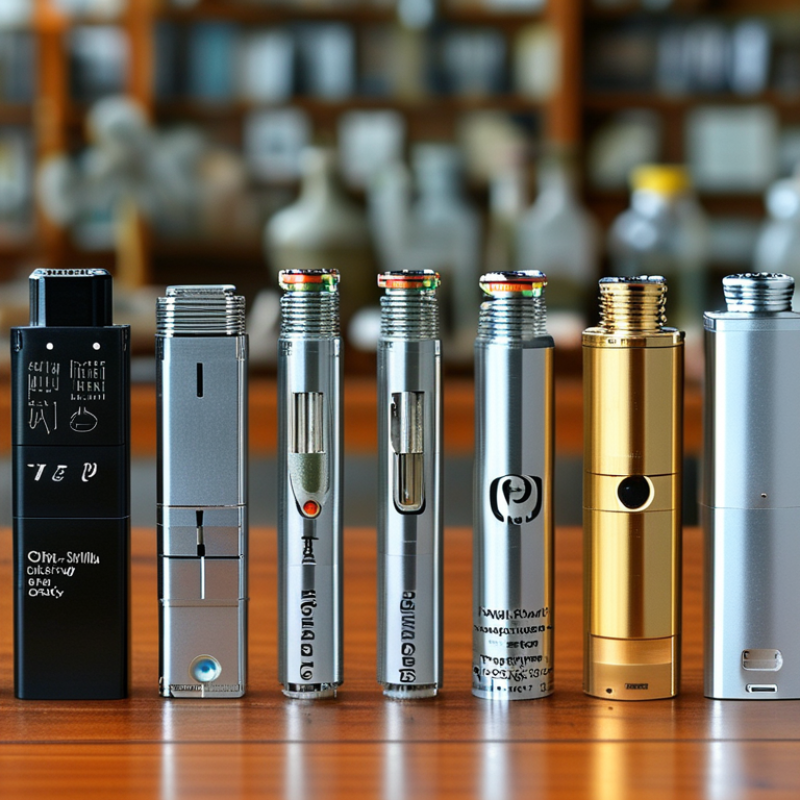
Vape hardware manufacturing in China covers a broad industrial chain, from component molding to final assembly. Common product categories include pod devices, refillable systems, tanks, batteries, heating elements, chargers, and control boards. Each category requires different engineering skills, testing methods, and production controls. A factory making plastic housings may not understand battery safety well.
Experienced buyers usually inspect more than a product sample. They review material specifications, assembly records, electrical test reports, and batch traceability. On a production line, operators may check airflow, charging performance, leakage, and heating consistency. Small details matter. A loose seal can damage an entire shipment.
Manufacturers also support custom dimensions, surface finishes, packaging, and firmware functions. However, customization can create hidden risks. A revised mouthpiece may change airflow, while a different battery cell can affect thermal behavior. This is where technical communication becomes essential. Drawings should show tolerances, materials, and inspection points clearly. Written records are more reliable than verbal promises.
Compliance remains a buyer’s responsibility as well as a supplier’s concern. Requirements differ across countries and may change frequently. Responsible sourcing teams verify applicable rules, age-related safeguards, labeling, recycling duties, and transport restrictions before ordering. Factory audits can help, but they are not perfect. A clean workshop does not automatically prove consistent quality. Independent testing and controlled pilot production provide stronger evidence.

Selecting a Chinese vape hardware supplier requires more than comparing unit prices. Grand View Research estimated the global e-cigarette market at USD 28.17 billion in 2023, with strong projected growth through 2030. That scale increases supplier competition, but it also rewards careful verification. Request factory audit records, current quality certificates, material specifications, and production samples. Check whether the supplier can provide batch numbers, inspection photos, and traceable test results. Do not rely on showroom appearance alone.
Safety evidence should match the destination market. Ask for battery transport documentation, electrical safety testing, leakage testing, and independent laboratory reports. Standards such as IEC 62133-2 and UN 38.3 may support battery evaluation, but they do not replace local legal review. The World Health Organization reported that more than 80 million people used e-cigarettes globally in 2022. This growing market makes responsible controls essential, especially for packaging, labeling, and age-restricted distribution. Details matter.
Supplier experience also appears in communication. Can the team explain failure rates, sampling methods, and corrective actions clearly? Request a pilot order before committing to volume. Compare five or six units from different batches. A supplier that resists reasonable testing deserves caution. My own checklist has a weakness: documents can look complete while production changes quietly. Recheck specifications before every shipment, and use third-party inspection when the order value justifies it. Reliability is built through repeated evidence, not promises.
For global buyers, China’s top vape hardware suppliers should be judged by evidence, not attractive catalogs. Reliable manufacturers provide clear factory details, product specifications, and quality records. They should explain materials, battery protection, charging performance, and expected service life. Ask for independent test reports when safety claims involve electrical components. Confirm that documents match the exact model you plan to purchase. A professional supplier also understands labeling, packaging, age restrictions, and import rules in your destination market. Regulations differ widely. Never assume one certificate covers every country.
Tips: Request samples before placing a large order. Check airflow, button response, charging stability, and surface finishing. Keep written records of defects and corrective actions. Also, confirm minimum order quantities, lead times, warranty terms, and spare-part availability. A video factory tour helps, but it is not a full audit.
A strong supplier should support traceability from components to finished units. Batch numbers, inspection reports, and controlled packaging can reduce disputes later. Ask how rejected products are separated and recorded. Some suppliers communicate well before payment, then respond slowly after production begins. That risk is easy to underestimate. My practical view is imperfect: even a careful checklist can miss weak after-sales support. Use staged payments, independent inspections, and a written quality agreement. Select partners that respect local laws and sell only compliant hardware for permitted markets.
Choosing among China’s top ten vape hardware suppliers requires more than factory photos or low prices. WHO’s 2023 global tobacco trends report estimated 1.25 billion adult tobacco users in 2022. That scale increases regulatory attention. Export buyers should verify destination-market rules before signing contracts. Certificates can mislead.
Request a current ISO 9001 certificate, but do not treat it as product-safety proof. For battery-powered devices, suppliers should provide applicable UN 38.3 transport evidence and IEC 62133-2 test reports. EU shipments may also require RoHS, REACH, EMC, and other relevant documentation. The General Product Safety Regulation has applied in the EU since December 13, 2024. Connected hardware needs extra review. Ask for production records, not promises.
Quality control should be visible on the factory floor. Inspect incoming cells, solder joints, charging protection, airflow, leakage, and surface defects. Require serial-level traceability and independent pre-shipment sampling. AQL inspection under ISO 2859-1 can support consistent decisions, though it cannot replace engineering tests. The 2024 Global E-waste Monitor reported 62 million tonnes of e-waste in 2022, with only 22.3% formally collected and recycled. Suppliers should explain battery separation, recycling guidance, and packaging materials. I would still question incomplete records. Small gaps become expensive recalls.
| Rank | Anonymous Supplier Profile | Typical Hardware Focus | Primary Export Documentation | Relevant Compliance Evidence | Critical Quality-Control Requirements | Battery and Transport Controls | Buyer Verification Priority |
|---|---|---|---|---|---|---|---|
| 01 | High-volume pod hardware manufacturer | Closed pods, rechargeable pod devices, integrated cartridges | Commercial invoice, packing list, bill of lading or airway bill, certificate of origin when required | ISO 9001 certificate; RoHS and REACH material declarations; market-specific technical file | Incoming inspection, dimensional checks, leak testing, charging-cycle tests, draw activation tests, final visual inspection | UN 38.3 test summary for lithium batteries; protected-cell design; short-circuit, overcharge, and thermal testing | Validate batch traceability, defect rate records, cartridge leakage rate, and consistency between production lots |
| 02 | Open-system vaporizer specialist | Refillable pod systems, replaceable coils, adjustable airflow devices | Product specification sheet, user manual, carton and label artwork, export packing records | RoHS restricted-substance evidence; REACH SVHC screening where applicable; EMC and electrical safety test reports | Airflow consistency, coil resistance tolerance, button-life testing, tank pressure testing, drop testing, and assembly torque control | Battery cell identification, IEC 62133-2 evidence where applicable, UN 38.3 transport compliance, and lithium-battery labeling | Confirm replacement-part compatibility, coil resistance accuracy, and documented failure-analysis procedures |
| 03 | Disposable device production line | Single-use vape hardware, prefilled or empty disposable assemblies | Commercial invoice, packing list, battery declaration, shipping classification, and destination-market labels | Destination-market product authorization; RoHS, REACH, EMC, and battery documentation as applicable | Automated leak inspection, puff activation testing, airflow testing, battery capacity sampling, and sealed-package inspection | UN 38.3 documentation, state-of-charge control for air freight, approved packaging, and lithium-battery handling procedures | Check production-date coding, battery aging controls, shelf-life evidence, and recycling or waste-marking requirements |
| 04 | OEM and private-label assembly supplier | Custom device housings, PCB assemblies, packaging, and contract manufacturing | Approved drawings, bill of materials, engineering change records, inspection report, and shipping documents | ISO 9001; material declarations; EMC and radio testing for connected products; destination-specific conformity records | First-article inspection, golden-sample approval, process capability monitoring, firmware version control, and change notification | Cell supplier qualification, protection-circuit validation, UN 38.3 test summary, and packaging certification for transport | Audit ownership of tooling, molds, software, drawings, and documented engineering-change approval |
| 05 | Ceramic-coil and atomizer component supplier | Ceramic heating elements, mesh coils, atomizer cores, and heating assemblies | Material specifications, inspection certificates, lot records, and customs documentation | Material composition declaration, RoHS evidence, REACH screening, and applicable food-contact or inhalation-contact assessment | Resistance uniformity, heating-temperature stability, dry-burn screening, wicking performance, and microscopic contamination checks | Component-level electrical safety testing and compatibility validation with the specified battery and control board | Request raw-material traceability and independent testing for metals, ceramics, adhesives, and potential contaminants |
| 06 | Lithium-battery-integrated device supplier | Rechargeable vape batteries, charging modules, protection boards, and power units | Battery test summary, safety data, packing declaration, invoice, and transport documentation | UN 38.3; IEC 62133-2 where required; EMC evidence; RoHS and REACH declarations | Capacity and internal-resistance sampling, charge-discharge testing, thermal protection, insulation checks, and aging tests | Cell matching, overvoltage and undervoltage protection, short-circuit protection, and compliant lithium-battery packaging | Verify the actual cell model against the UN 38.3 summary and inspect shipment labels before dispatch |
| 07 | Smart and connected-device supplier | USB-C devices, digital displays, variable-power units, and connected hardware | Firmware records, electrical test reports, user instructions, conformity files, and shipment documents | EMC testing; radio equipment requirements when wireless functions exist; RoHS, REACH, and battery compliance | Display accuracy, USB charging safety, firmware regression testing, electromagnetic compatibility, and water or dust protection testing when claimed | Charging-current limits, thermal cut-off, battery protection, USB port durability, and transport classification | Confirm software version control, cybersecurity documentation where applicable, and long-term component availability |
| 08 | Metal and plastic enclosure supplier | Aluminum housings, plastic shells, mouthpieces, buttons, and mechanical parts | Material certificates, color and finish standards, drawings, inspection reports, and export documents | RoHS and REACH declarations; restricted-substance testing for coatings, plastics, solder, and surface treatments | Color difference control, coating adhesion, salt-spray testing where relevant, dimensional inspection, burr inspection, and drop testing | Electrical insulation, grounding or isolation checks, heat resistance, and compatibility with the installed battery | Verify material grade, coating composition, mold ownership, and consistency between approved samples and mass production |
| 09 | Cartridge, tank, and sealing-component supplier | Empty cartridges, reservoirs, seals, gaskets, mouthpieces, and liquid-contact components | Material declarations, dimensional reports, leak-test records, packaging specifications, and commercial documents | REACH and RoHS evidence; material safety information; additional destination-market requirements for liquid-contact parts | Pressure and vacuum leak testing, seal compression checks, solvent compatibility, dimensional control, and cleanliness inspection | Electrical isolation from the coil and battery; transport packaging that prevents deformation and leakage | Request extractables and leachables assessment when required by the destination market and intended liquid formulation |
| 10 | Export-focused contract manufacturer | Mixed-product assembly, kitting, packaging, inspection, and international fulfillment | Commercial invoice, packing list, certificate of origin when requested, export declaration, and freight documents | Market-specific conformity assessment; ISO 9001; RoHS, REACH, EMC, battery, and product-safety evidence as applicable | Incoming quality control, in-process inspection, final AQL inspection, barcode verification, carton drop testing, and complaint tracking | Dangerous-goods training, UN 38.3 documentation, correct lithium-battery marks, approved freight packaging, and shipment segregation | Audit the complete supply chain, verify subcontractor control, and require corrective-action reports for nonconforming goods |
Note: Compliance obligations depend on the destination country, product configuration, battery type, wireless functionality, intended use, and whether the product is supplied empty or with e-liquid. Supplier-specific certificates and test reports should be independently verified before purchase.
China Top 10 Vape Hardware Suppliers for Global Buyers?
For global buyers, supplier selection starts with documentation, not attractive photos. Request company registration, factory audit records, product specifications, and quality-control procedures. The 2023 World Bank Logistics Performance Index shows that customs efficiency and shipment reliability strongly affect delivery performance. Ask for Incoterms, carton dimensions, tracking arrangements, and a written process for damaged goods.
Pricing requires more than comparing unit quotes. Confirm tooling fees, sample charges, minimum order quantities, packaging costs, inspection fees, and payment terms. Grand View Research estimated the global electronic cigarette market at over USD 18 billion in 2022, indicating strong competition but also pricing pressure. A very low quotation may hide weaker materials or limited testing. I have seen buyers regret choosing the cheapest offer. That mistake is expensive.
Shipping plans should include compliant labeling, battery documentation where applicable, and destination-country requirements. UNCTAD’s Review of Maritime Transport highlights continuing volatility in freight networks, so buyers should request two shipping options and realistic buffer time. After-sales support matters more than polished sales messages. Define response times, spare-part availability, warranty limits, and evidence required for claims. Keep inspection photos and batch records. No checklist is perfect. A small pilot order can reveal communication delays, inconsistent finishes, or packaging damage before a larger contract.
Planning benchmarks for global buyers comparing shipping options. Actual transit time depends on destination, customs clearance, battery classification, documentation, and the selected carrier.
When ordering, confirm MOQ, production lead time, packaging requirements, and compliance documents before payment. For pricing, compare the complete landed cost rather than the factory unit price alone. After-sales terms should clearly define warranty duration, defect evidence, replacement procedures, and response times.
Whether you’re looking for fire-rated walls, doors, openings, floors or a specialty service, we have the solution for you. With over 40 years of experience in testing, innovating, and providing technologically advanced fire-rated glass and framing products, we deliver unyielding performance and quality at a competitive price.
