- Proudly Made in the USA
Custom Clear Umbrellas are practical products, but they are also visible brand touchpoints. A transparent canopy keeps the street, storefront, or event in view while shielding the user from rain. For buyers, the details matter: canopy clarity, frame strength, handle comfort, print quality, and packing consistency. Small differences show up quickly when hundreds of units arrive.
Market research can provide useful context, but it needs careful reading. Grand View Research’s umbrella market analysis discusses demand across consumer and commercial uses; it does not isolate clear-canopy products. UN Comtrade classifies umbrellas under HS 6601, a category that also covers products beyond Custom Clear Umbrellas. These sources help explain the wider market, not certify an individual factory. That distinction matters.
This guide introduces ten China-based manufacturers for buyers comparing custom clear umbrellas. It considers product range, customization options, production capabilities, and the evidence companies make available to customers. A polished catalogue is only a starting point. Ask for material specifications, a physical sample, production timelines, and clear answers about inspection procedures. Look closely at the canopy seam and the joint where the ribs meet the shaft. Those details are easy to miss online. No shortlist can replace direct verification, and supplier information may change. Still, a structured comparison can help buyers ask sharper questions before placing an order.
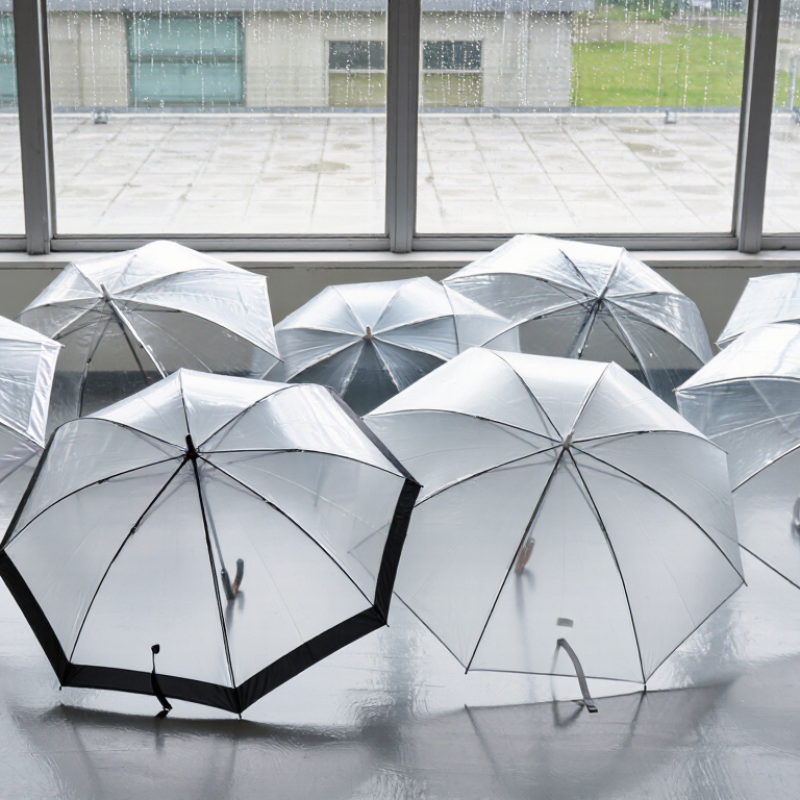
A custom clear umbrella manufacturer in China should do more than print a logo or cut transparent film. It should control canopy material, panel joining, frame assembly, and repeatable inspection. Ask for the film specification, thickness tolerance, and a physical sample. Check whether seams stay clear and even, ribs open without catching, and the handle remains secure after repeated use. Small defects matter. A hazy panel or rough seam can spoil the whole product.
Reliable makers also document how they test samples and production batches. Request checks for opening cycles, rain leakage, and frame stability, with written pass criteria. For material weathering, ask whether the supplier uses a defined test method, such as ISO 4892-2, and shares the conditions and results. The World Bank’s 2023 Logistics Performance Index scored China 3.7 out of 5 overall; this offers context on national logistics, not proof of any factory’s quality. A limitation remains: a polished sample may not match a large production run. Ask to inspect a pre-shipment sample and clarify who handles rework if defects appear.

China’s clear umbrella supply chain is built from specialized workshops, not one factory doing everything. Upstream suppliers provide transparent POE, EVA, or PVC canopy film, steel or fiberglass ribs, shafts, tips, and molded handles. In Zhejiang’s Shaoxing–Shangyu area, umbrella makers and component suppliers often sit close together, helping shorten sampling and replenishment cycles. Small details matter: film clarity, seam sealing, rib alignment, and the feel of the handle can all change the finished product. Not quite interchangeable.
UN Comtrade’s 2023 HS 6601 trade data put China’s umbrella exports at roughly US$1.1 billion. That customs category covers umbrellas generally, not clear umbrellas alone, so it cannot measure the transparent segment directly. Production is commonly divided among component vendors, canopy cutting and printing, frame assembly, final inspection, and export coordination. Buyers typically assess water resistance, opening and closing cycles, wind performance, and print registration through samples and batch checks. A clear canopy can reveal uneven seams immediately. Yet public factory profiles rarely disclose comparable defect rates or test protocols; that gap makes supplier comparisons less certain than polished product photos suggest.
This overview describes ten common supplier profiles and production roles in China’s clear-umbrella supply chain. It is not a verified ranking of individual manufacturers.
| Supplier Profile | Typical Production Role | Relevant Clear-Umbrella Capabilities | Common Customization Options | Useful Buyer Checks |
|---|---|---|---|---|
| Integrated umbrella OEM | Coordinates canopy cutting, sewing, frame assembly, and packing, either in-house or through established suppliers. | Can manage standard clear dome and straight-handle umbrella production. | Canopy material, handle, frame finish, packaging, and logo placement. | Ask which production steps are in-house and request a sample matching the proposed bill of materials. |
| Clear-canopy specialist | Focuses on transparent canopy construction and the assembly details needed to maintain a neat appearance. | Experience working with transparent PVC or POE canopy panels and their seams. | Canopy shape, panel layout, colored edging, and printed graphics where technically suitable. | Check material specification, clarity, seam consistency, and how the canopy looks when opened. |
| Promotional-product OEM | Produces umbrellas as branded promotional merchandise, often as part of a broader product range. | May offer clear dome styles alongside other umbrella formats. | Logo printing, hangtags, retail packaging, and coordinated promotional sets. | Confirm artwork proofing, print method, color approval, and packaging requirements before bulk production. |
| Fashion-accessory manufacturer | Develops umbrellas with an emphasis on appearance, coordinated colors, and retail presentation. | Can support clear canopies with decorative trim or fashion-oriented handles. | Handle shape, trim color, printed motifs, labels, and retail-ready packaging. | Review a physical sample for finish quality and consistency across the canopy, handle, and trim. |
| Frame-focused producer | Specializes in or has strong sourcing capability for umbrella ribs, shafts, runners, and opening mechanisms. | Can supply frame options for clear dome or other umbrella constructions. | Frame color, shaft material, rib configuration, and manual or automatic opening options where available. | Check frame specifications, opening and closing function, and stability under the intended use conditions. |
| Printing and decoration supplier | Provides artwork preparation and decoration services, sometimes working with a separate umbrella factory. | Can coordinate graphics for transparent panels when the selected material and print process allow it. | Panel graphics, logos, and selected decorative details. | Ask for a print sample on the actual canopy material; appearance on paper or a digital mock-up may differ. |
| Small-batch customization workshop | Handles limited or trial orders, often with fewer production options than a large-scale factory. | May customize available clear-umbrella models rather than develop a new frame or canopy construction. | Selected colors, logos, labels, and packaging, subject to order quantity and available stock. | Confirm minimum order quantity, setup charges, sample availability, and whether the offered model is stock or made to order. |
| Export-oriented umbrella supplier | Coordinates manufacturing, export documentation, packing, and communication for overseas buyers. | May source clear umbrellas from its own factory or partner factories. | Carton markings, retail packaging, product labeling, and order documentation. | Clarify the actual production site, inspection arrangements, shipping terms, and responsibility for export documents. |
| OEM/ODM product developer | Supports buyers developing a custom product based on a reference sample, drawing, or specification. | Can assess whether a requested clear canopy, frame, or handle design is practical for production. | Product dimensions, material combinations, construction details, and custom packaging. | Agree on drawings, tolerances, approved materials, sample sign-off, and change-control procedures. |
| Umbrella sourcing and assembly partner | Combines components from multiple suppliers and arranges final assembly or quality checks. | May offer several clear-umbrella styles without manufacturing every component itself. | Model selection, branding, packaging, and component choices from available suppliers. | Request clear disclosure of factory locations, component origins, inspection steps, and production accountability. |
Buyer note: Clear umbrellas commonly use transparent PVC or POE canopy material, but specifications vary by product. Confirm the exact material, frame construction, printing method, order quantity, lead time, and quality requirements directly with the supplier; these details are not uniform across manufacturers.
Selecting China’s top custom clear umbrella manufacturers requires more than comparing quotes. Grand View Research estimated the global umbrella market at USD 6.7 billion in 2023 and forecast continued growth through 2030. That market context makes supplier reliability important, but it does not prove a factory’s quality. Ask for a recent production sample and inspect canopy clarity, panel alignment, stitching, and handle finish under bright light.
Check materials and measurable quality controls. Request the canopy film or fabric specification, frame material, opening-cycle test results, and inspection records for water leakage and wind resistance. Clear canopies can show wrinkles and cloudy patches more easily than printed ones. Looks matter. So does proof. Confirm whether a supplier can provide batch traceability, stable production capacity, and written tolerances for dimensions and color. Compare sample quality with the agreed specification, not just with product photos.
Tips: Test several umbrellas in real rain, then inspect seams and ribs for looseness. Ask how defects are recorded and handled. A low price may hide inconsistent film thickness or weak joints; I would not assume one sample represents every production run. Cite your market context as Grand View Research, Umbrella Market Size, Share & Trends Analysis Report, 2024–2030.
China’s custom clear umbrella sector includes factories with different strengths, from compact manual designs to large canopy printing. These ten manufacturer profiles are best read as a sourcing guide, not a verified ranking. Compare each supplier’s materials, sampling process, and quality checks before placing an order.
Some manufacturers focus on transparent PVC canopies with reinforced seams and simple curved handles. Others offer printed borders, colored frames, or automatic opening mechanisms. A capable factory should explain how it controls ink placement, checks canopy clarity, and tests frame movement. Ask for close-up sample photos. Better still, inspect a physical sample. Small defects show clearly on transparent panels.
Production scale also matters. Some suppliers handle small custom batches, while others are set up for larger orders and repeat specifications. Request details about minimum quantities, sample fees, lead times, and packaging. Ask whether they check stitching, ribs, and opening cycles before shipment. Claims deserve evidence. A test report or documented inspection process is more useful than a polished product image. Clear umbrellas can look alike online, and supplier descriptions are not always precise. That is worth remembering.
Metric diameters are shown with their inch equivalents in the tooltips, calculated using 1 inch = 2.54 centimeters. These are reference points for comparing custom sizing, not a manufacturer ranking or market survey.
Compare China-based clear umbrella manufacturers using one written specification, not broad catalogues. State canopy diameter, PVC or POE film, film thickness, frame material, handle finish, and packaging. Request a sample matching the proposed production version. A clear canopy can look flawless in photos, yet show haze, wrinkles, or uneven seams under daylight. Ask for proof.
Review evidence that connects claims to production: dated sample photos, inspection records, material data sheets, and clear defect limits. Confirm how the factory checks opening cycles, rib alignment, and water leakage. Ask who approves changes after sampling. Small details matter. If answers stay vague, treat the quotation as incomplete, even when the unit price looks attractive.
Compare sourcing risks, not just prices. Check minimum order quantities, tooling charges, sample fees, lead times, carton dimensions, and replacement terms in writing. Ask for recent production capacity and a realistic schedule around peak season. Communication is part of quality control. Notice whether replies address your exact questions. Leave room for uncertainty: a successful sample does not guarantee every batch will match. Set an inspection point before shipment, and record agreed tolerances so both sides can verify the finished umbrellas.
Whether you’re looking for fire-rated walls, doors, openings, floors or a specialty service, we have the solution for you. With over 40 years of experience in testing, innovating, and providing technologically advanced fire-rated glass and framing products, we deliver unyielding performance and quality at a competitive price.
