- Proudly Made in the USA
China’s night-vision optics market includes manufacturers serving security, industrial, wildlife-observation, and imaging applications. Choosing a supplier takes more than comparing catalog prices. Buyers should examine lens materials, coating options, focal length, aperture, distortion, and compatibility with the intended sensor. Small details matter. A faint halo around a light source can affect image interpretation, while poor alignment may reduce sharpness across the frame.
Imaging scientist James R. Janesick is known for his work on image sensors. A useful paraphrase of the engineering principle reflected in that work is: “The sensor can only record the light that the optics deliver.” This is an editorial paraphrase, not a direct quotation. It points to a practical reality: Night Vision Lenses and sensors must be evaluated as a system. Ask manufacturers for test methods, sample images, tolerance information, and performance data under specified lighting conditions. A clear test report is more useful than a broad claim of “high performance.”
This guide will help readers compare China-based manufacturers through verifiable criteria, including technical documentation, production consistency, customization, and after-sales support. Look for evidence, not polished promises. Request a sample and inspect edge sharpness, coating uniformity, and fit with the target device. Some suppliers may provide limited public data, so independent testing can still be necessary. No single specification tells the whole story; the right choice depends on the application, operating environment, and acceptable trade-offs.
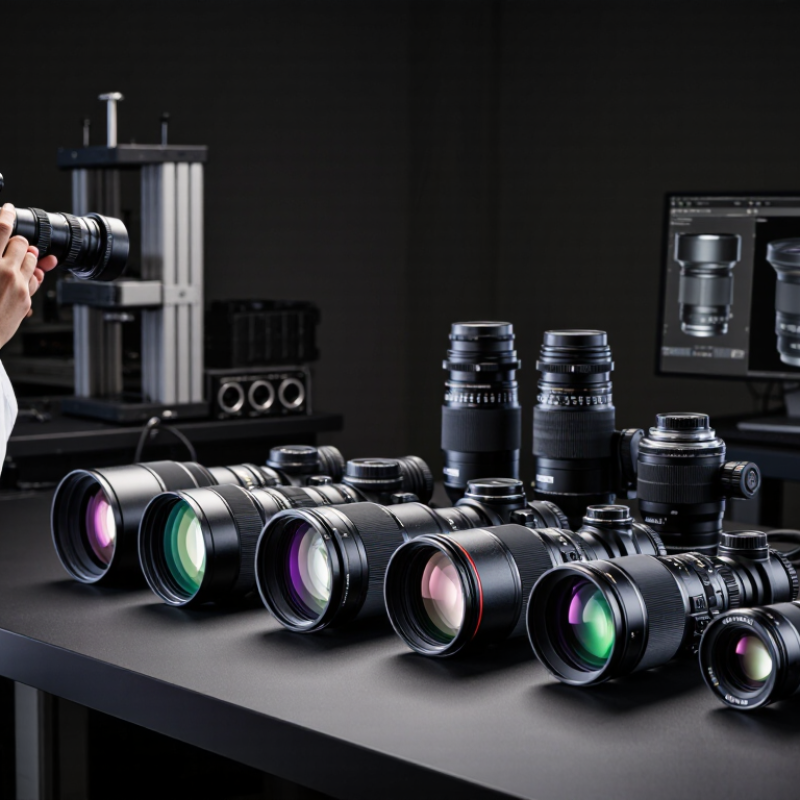
A night vision lens does more than gather light. It must transmit the wavelengths used by the sensor, preserve contrast, and keep fine details sharp across the image. ISO 20473:2007 defines near-infrared as 0.78–3 micrometres, a broad range that helps explain why “night vision” does not describe one fixed optical design. Some systems rely on near-infrared illumination; others detect visible light in dim scenes. The lens coating, glass, and focus range should match the actual sensor and light source. Small details matter. A coating optimized for visible light can reduce useful infrared transmission.
Lens quality also affects edge sharpness, glare, and focus consistency when temperatures change. The EMVA 1288 Release 4.0 measurement standard reports camera characteristics including quantum efficiency and temporal dark noise, helping buyers compare sensor performance across wavelengths. It is a useful reminder:
A lens and sensor work as a system.
A bright-looking image is not always a detailed one. Ask for measured transmission across the intended wavelength band, not just a single peak figure. Check resolution at the image edges, too; central sharpness can hide soft corners. Specifications still leave room for doubt, since test conditions may differ from real scenes. A practical evaluation should include low-light targets, moving subjects, and repeated focus checks.

Night vision starts with the lens, which gathers faint light and directs it toward an image intensifier or digital sensor. In image-intensifier systems, a wider aperture can help collect more available light. Digital systems also depend on sensor sensitivity and image processing. Thermal devices work differently: their optics focus infrared energy emitted by objects, rather than visible light. These technologies are not interchangeable.
Lens quality affects more than brightness. Glass type, coatings, focal length, and alignment can influence sharpness, glare, and edge distortion. A wide field of view helps with awareness, but may make distant details appear smaller. Manufacturing checks should include focus consistency and performance across the image, not just a clear center. Specifications alone can be misleading; real results depend on the sensor and viewing conditions too. Small details matter. Even careful testing has limits.
Tips: Compare lenses using the same sensor and lighting conditions. Check for haze, uneven focus, and reflections around bright points. Ask for measured specifications and test samples when evaluating a supplier. Treat advertised range as an estimate, not a guarantee.
China Best Night Vision Lenses Manufacturers?
China’s Night Vision Lens Manufacturing Landscape
China’s night-vision lens manufacturing landscape brings together optical design, precision processing, coating, and assembly. Some factories produce lens elements in-house; others rely on specialist partners for coatings or mechanical parts. This can support flexible production, but capabilities vary. Small details matter.
For a lens used with a low-light imaging sensor, buyers need to check more than focal length. Ask about transmission across the sensor’s intended infrared band, distortion, focus stability, and coating uniformity. Tolerances should be documented, not just described as “high precision.” A clean datasheet is useful, but it cannot replace sample testing. Test the lens with the intended sensor and housing, since alignment or stray light can change the image.
Manufacturing strength also depends on inspection and repeatability. Look for recorded measurements, incoming-material checks, and environmental tests suited to the product’s actual use, such as temperature cycling. Testing takes time. Yet the landscape is not perfectly even: public specifications may leave gaps, and small production runs can behave differently from samples. Clear drawings, agreed acceptance criteria, and written test results help close those gaps. The picture is not always neat, so technical review matters as much as price.
| Dimension | Typical technical landscape | Common materials or processes | Useful evaluation checks |
|---|---|---|---|
| Night-vision technology | Lens requirements differ between image-intensifier systems, which amplify available visible and near-infrared light, and thermal-imaging systems, which detect infrared radiation emitted by objects. | Visible/NIR optical-glass lens assemblies; infrared-transmitting lens elements for thermal imaging. | Confirm the sensor type, required spectral response, field of view, focal length, and operating conditions before comparing a lens design. |
| Visible and near-infrared band | Image-intensifier systems commonly use visible and near-infrared light. The exact usable range depends on the image intensifier, filters, and optical design. | Optical glass, antireflection coatings, and lens assemblies designed for the specified transmission band. | Request spectral-transmission data for the complete assembly, not only for an individual lens element. |
| Short-wave infrared (SWIR) | SWIR cameras commonly operate in approximately the 0.9–1.7 μm region, although the camera’s detector and system design determine the actual band. | Materials selected for transmission in the specified SWIR band; precision grinding and polishing or other suitable optical fabrication methods. | Check in-band transmission, coating performance, image quality, and compatibility with the detector and environmental requirements. |
| Mid-wave infrared (MWIR) | Thermal-imaging systems often use the atmospheric window around 3–5 μm. The system’s specified passband may be narrower. | Infrared-transmitting materials can include germanium, chalcogenide glass, or other materials selected for the design and operating conditions. | Review transmission across the required band, thermal behavior, coating durability, and performance over the specified temperature range. |
| Long-wave infrared (LWIR) | Many thermal-imaging systems use the atmospheric window around 8–12 μm; the camera and application define the actual operating band. | Germanium, chalcogenide glass, and other infrared materials may be considered, subject to optical, mechanical, and environmental requirements. | Check spectral transmission, thermal focus shift, surface quality, coating specification, and environmental test conditions. |
| Optical fabrication | Production may involve material preparation, blank generation, shaping, polishing or turning, centering, coating, assembly, and final inspection. The route depends on material and design. | Precision grinding and polishing are used for many optical materials; diamond turning can be suitable for certain infrared materials and surface geometries. | Ask for process capability evidence relevant to the part, including dimensional inspection and surface-form or surface-finish results. |
| Lens coatings | Antireflection coatings are designed for a wavelength band and angle of incidence. A coating specified for one spectral band is not automatically suitable for another. | Single-layer or multilayer optical coatings selected for the substrate, wavelength range, and application. | Verify the coating band, measured reflectance or transmission, adhesion, and any required abrasion, humidity, or temperature testing. |
| Optical performance | Relevant parameters can include focal length, aperture, field of view, distortion, relative illumination, modulation transfer function, and focus stability. | Performance is established by the complete optical design and assembled system, not by material choice alone. | Compare test methods and acceptance limits under the same wavelength, aperture, focus, and measurement conditions. |
| Quality documentation | Optical drawings and inspection plans commonly specify dimensions, tolerances, surface quality, and coating requirements. ISO 10110 is a series of standards for preparation of optical drawings. | Inspection records may include dimensional reports, surface-form measurements, coating test results, and traceability information. | Check that the drawing, inspection method, sample identification, and acceptance criteria match the purchase specification. |
| Supplier comparison | China’s manufacturing landscape includes capabilities across optical processing, coating, assembly, and testing; capability varies by supplier, product, and specification. | Assess the relevant production steps and whether critical operations are performed in-house or through qualified partners. | Compare verified sample performance, process controls, documentation, production capacity, lead time, and after-sales support rather than relying on broad capability claims. |
A reliable night vision lens manufacturer should be judged by measurable performance, not polished sales language. Start with the intended use and compare the lens’s focal length, aperture, spectral transmission, distortion, and coating specifications. Ask for test reports that identify the equipment and conditions used. Numbers without methods are hard to verify.
Manufacturing consistency matters as much as a strong sample. Ask how the supplier inspects surface defects, checks dimensions, and tracks production batches. A practical evaluation may include testing several lenses under the same low-light conditions, then comparing image sharpness from center to edge. Check how the manufacturer handles tolerances, delivery changes, and technical questions. Clear, specific answers are useful evidence of process knowledge. Still, one sample cannot predict every production run. No scorecard is perfect.
Tips: Request a sample and its inspection record before placing a larger order. Compare images using the same camera, target, distance, and lighting. Keep notes on focus, glare, and edge detail; small differences can be easy to overlook. A supplier’s willingness to discuss limitations can be more informative than a flawless-looking brochure.
Applications, Quality Standards, and Product Selection Factors
Night vision lenses serve security monitoring, wildlife observation, equipment inspection, and search operations. Their performance depends on the sensor, illumination, and viewing distance. A lens suited to a compact camera may not provide enough detail across a wide outdoor scene. Check focal length, aperture, image circle, and near-infrared transmission against the intended camera system. Small details matter.
When evaluating manufacturers in China, request measurable evidence rather than relying on catalog language. Useful records include spectral-transmission curves, resolution or MTF data, coating durability results, and inspection procedures. A documented quality system, such as ISO 9001 certification, can indicate process controls, but it does not prove that every lens suits your application. Ask how samples are tested and whether production batches receive consistent checks. No specification sheet tells the whole story.
Product selection also involves trade-offs. A wider aperture can gather more light, yet may increase size, cost, or edge softness. Confirm mount dimensions, sensor compatibility, distortion limits, and performance in the actual operating temperature range. Compare sample images under similar lighting, not just laboratory figures. I would also clarify tolerances in writing; overlooked details can cause frustrating integration delays. Even careful testing cannot predict every field condition, so keep a realistic sample-evaluation period.
Whether you’re looking for fire-rated walls, doors, openings, floors or a specialty service, we have the solution for you. With over 40 years of experience in testing, innovating, and providing technologically advanced fire-rated glass and framing products, we deliver unyielding performance and quality at a competitive price.
