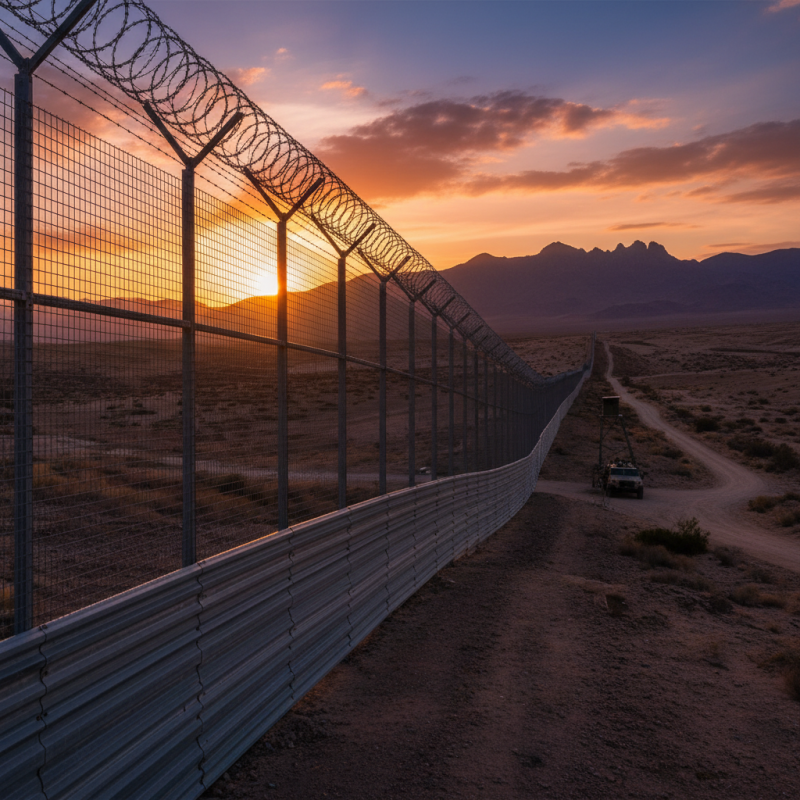
Why is a Пограничный забор Essential for Border Security?
Border security is a pressing issue in many countries. The Пограничный забор, or border fence, serves as a crucial tool in this context. It provides a physical barrier that helps to regulate entry and enhance national security.
The Пограничный забор not only deters illegal crossings but also protects against smuggling. Its presence can foster a sense of safety in communities near borders. While it is not a complete solution, it plays a significant role in a larger security strategy.
However, this approach does raise questions about effectiveness. Are fences enough to address complex border issues? Some argue they can create a false sense of security. Reflecting on these points is vital for continuous improvement in border management and security policies.
The Importance of a Пограничный забор in Modern Border Security
A Пограничный забор, or border fence, serves a vital role in modern border security. It is more than just a physical barrier; it symbolizes national sovereignty and public safety. Countries facing issues like illegal immigration or trafficking often find that a robust border fence provides a necessary first line of defense. This structure helps control the flow of people and goods, ensuring that entry points are monitored and regulated effectively.
The impact of a Пограничный забор can be significant. It creates a clear delineation that discourages unauthorized crossings. Well-designed fences often incorporate technology, such as surveillance cameras and sensors, enhancing overall security. However, these measures also invite consideration of the human aspects. Fencing can lead to unintended consequences, such as the isolation of communities or environmental concerns. Balancing security needs with humanitarian perspectives is a complex challenge.
In many cases, a Пограничный забор fosters a sense of safety among citizens. They feel more secure knowing that measures are in place to protect their homeland. Still, it's crucial to recognize that a fence alone is not a guaranteed solution. Ongoing dialogue about immigration policies and border management is essential. Engaging local communities can help create a more comprehensive approach to border security. Thus, while the fence plays a key role, it's part of a larger conversation that needs to happen.
Historical Context of Border Fences and Their Evolution
The evolution of border fences dates back centuries. These structures have served as barriers, demarcating territories and enhancing security. Historically, countries employed walls and barriers to protect against invasions. The Great Wall of China and Hadrian's Wall in Britain exemplify how nations have long relied on physical obstacles to maintain sovereignty.
In modern times, border fences have taken on new forms. Data from the U.S. Department of Homeland Security indicates that border security fences reduce illegal crossings by up to 90%. This statistic highlights the effectiveness of barriers in controlling migration and enhancing national security. As geopolitical dynamics continue to evolve, the use of fences remains a contentious yet vital topic.
Tips: Engage with local communities to understand their perspectives on border security. Gathering insights from both sides can help shape effective border strategies. A holistic approach is essential. Always consider the social impacts of building fences. Explore innovative solutions that balance security with humanitarian concerns.
Evolution of Border Fences: Historical Context and Importance
This chart illustrates the increasing length of border fences over the years, highlighting their evolving importance in securing national borders. The significant growth from the 1990s to 2023 emphasizes the changing dynamics of border security and the development of fencing as a strategic tool.
Key Features and Functions of a Border Fence
A border fence is vital for enhancing national security. It acts as a physical barrier that deters illegal crossings and helps regulate immigration. According to a report by the U.S. Department of Homeland Security, between 2004 and 2019, border apprehensions significantly dropped in areas where fences were constructed. Enhanced surveillance is critical in these regions.
The key features of a border fence include height, material, and technology. A robust fence typically measures between 14 and 18 feet high, making it difficult to scale. Materials like steel and concrete provide durability against weather and wear. To augment physical barriers, many modern fences also integrate sensors and cameras. According to industry analysis, fences equipped with detection technologies can reduce unauthorized crossings by up to 90%.
While effective, border fences are not flawless. Environmental concerns are often raised about their impact on wildlife. In some areas, fences disrupt animal migration routes. Balancing security needs with ecological preservation is an ongoing challenge. Continuous evaluation of these barriers is crucial to ensure efficient and humane border management.
Impact of Пограничный забор on Immigration and Smuggling
The Пограничный забор plays a critical role in controlling immigration and smuggling. Its presence establishes a physical barrier that deters unauthorized crossings. This deterrence is essential in areas where illegal activities are rampant. Patterns of movement become easier to track.
However, the effectiveness of the barrier is not absolute. Smugglers have often adapted their methods to circumvent such obstacles. They use drones, underground tunnels, and sophisticated technologies. This adaptability raises questions about the true effectiveness of the Пограничный забор. Are authorities always one step behind?
Importantly, the barrier influences the community around it. Border towns experience socio-economic shifts. Families are impacted, and local economies can suffer or thrive based on security measures. Despite the intended purpose, the Пограничный забор creates both challenges and opportunities. It is a complex issue, prompting ongoing debate around safety and ethics in border control.
Why is a Пограничный забор Essential for Border Security? - Impact of Пограничный забор on Immigration and Smuggling
| Aspect | Description | Impact |
| Physical Barrier | A physical structure to deter illegal crossings. | Reduces unauthorized entry attempts significantly. |
| Surveillance Technology | Integration of cameras and sensors along the barrier. | Enhances monitoring and quick response to breaches. |
| Law Enforcement Collaboration | Partnerships between border patrol and local law enforcement. | Improves overall efficacy in managing border security. |
| Immigration Patterns | Influences the routes and methods of undocumented immigrants. | May lead to increased activity in remote crossing areas. |
| Smuggling Operations | Affects trafficking networks and their logistics. | Can drive smugglers to adopt more dangerous methods. |
| Public Perception | Influences the perception of safety and security among citizens. | Can lead to increased support for stricter border policies. |
Technological Advancements Enhancing Border Fence Effectiveness
Technological advancements are transforming the effectiveness of border fences. Modern fencing systems integrate various technologies, making them much more than just physical barriers. Sensors are now embedded in many border walls. These sensors detect movement and provide real-time alerts. This immediate feedback enhances the response time of security personnel. Furthermore, thermal imaging cameras can monitor activity even in low visibility.
Drone technology has also become an essential asset for border security. Drones can cover large areas quickly and provide aerial surveillance. This capability allows for better assessment of potential breaches. However, challenges exist. Relying solely on technology may breed complacency among border agents. Human oversight is critical in interpreting data and taking appropriate action.
Despite these innovations, no solution is perfect. Border security is complex and multifaceted. The integration of technology raises questions about privacy and its implications. Striking a balance between security and individual rights remains a pressing concern. Future developments must consider these ethical dimensions while enhancing effectiveness.