| 1 | Floor-to-Ceiling Fixed Window | Contemporary, minimalist, and urban homes | Creates a clean glass wall and maximizes daylight and exterior views | Width: 48–120 in
Height: 72–120 in | Double or triple insulating glass; low-emissivity coating | Low-e double glazing: U-factor about 0.25–0.30
Triple glazing can reach about 0.15–0.22 | Requires careful structural support, flashing, and solar-control planning |
| 2 | Wide Horizontal Picture Window | Mid-century modern, ranch, and single-story homes | Emphasizes long landscape views while reinforcing horizontal lines | Width: 60–144 in
Height: 36–72 in | Double-pane low-e glass with warm-edge spacer | U-factor about 0.25–0.32
SHGC selected by climate and orientation | Large west- or south-facing areas may need exterior shading |
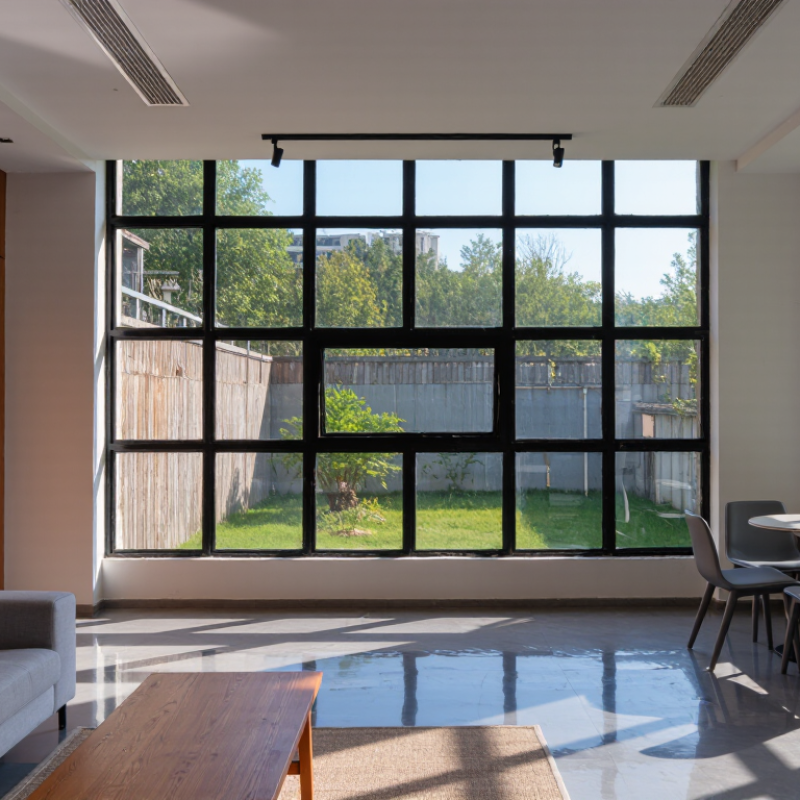
| 3 | Black-Framed Gridless Window | Industrial modern, modern farmhouse, and loft-style homes | Adds strong contrast and an uncluttered architectural appearance | Width: 36–96 in
Height: 48–96 in | Low-e insulating glass with thermally improved frame material | Target whole-window U-factor of 0.30 or lower in colder regions | Dark frames can absorb more heat and may require careful installation clearances |
| 4 | Corner Picture Window | Modern coastal, hillside, and view-oriented homes | Opens two elevations toward a wider panoramic view | Each leg: 36–84 in wide
Height: 48–96 in | Low-e double or triple glazing with reinforced corner detailing | U-factor about 0.20–0.30, depending on frame and glass package | Corner loads, water management, and structural movement need professional design |
| 5 | Clerestory Picture Window | Passive-solar, Scandinavian, and modern eco-homes | Introduces daylight high on the wall while preserving privacy | Width: 24–96 in
Height: 18–48 in | Low-e glass; choose higher or lower solar gain according to climate | U-factor about 0.20–0.30
Visible transmittance commonly 40% or higher | High windows need accessible cleaning and coordinated daylight control |
| 6 | Picture Window with Narrow Side Lites | Transitional modern and updated traditional homes | Provides a broad central view with balanced vertical proportions | Overall width: 60–144 in
Height: 48–96 in | Matching low-e glass throughout; fixed side lites improve visual continuity | Use one consistent U-factor and SHGC package across the assembly | Multiple frame joints increase the importance of accurate installation |
| 7 | Arched Picture Window | Mediterranean revival, soft contemporary, and statement façades | Adds a sculptural focal point without using an operable window | Width: 36–96 in
Height: 48–120 in | Tempered or laminated low-e glass where required by location and code | Performance varies significantly with curved geometry and frame design | Custom shapes generally cost more and require precise field measurements |
| 8 | Triangular or Trapezoidal Fixed Window | Geometric modern, A-frame, and dramatic roofline designs | Fills gable ends and highlights unusual architectural angles | Base: 36–120 in
Overall height: 24–96 in | Insulating low-e glass; safety glazing may be needed in hazardous locations | Specify certified whole-window values rather than estimating from glass alone | Complex geometry can increase lead time, cost, and installation difficulty |
| 9 | Deep-Reveal Picture Window | Warm minimalism, Japandi, and natural-material homes | Uses a recessed opening to create shadow lines and visual depth | Width: 36–120 in
Height: 36–96 in | Low-e double glazing with insulated frame and carefully sealed interior trim | U-factor about 0.25–0.32 for many modern double-glazed assemblies | Deep sills can collect condensation or moisture if air sealing is inadequate |
| 10 | Picture Window with a Low-Level Privacy Band | Urban modern, compact homes, and street-facing rooms | Maintains daylight and views while reducing direct sightlines at eye level | Width: 36–120 in
Height: 48–96 in | Clear low-e glass with translucent, patterned, or electronically controlled lower glazing | Select a whole-window U-factor around 0.25–0.32 where appropriate | Privacy glass can reduce visible transmittance and should be tested in the actual room |