- Proudly Made in the USA
Choosing a wire by appearance alone is a quiet way to invite trouble. A conductor that bends easily on a workbench may stiffen in cold air, fatigue beside a moving hinge, or overheat inside a crowded enclosure. Flexible Wire selection depends on the job: movement, current, voltage, temperature, abrasion, chemicals, and installation space all matter. Small details matter, too. A silicone-insulated lead near a warm motor behaves differently from a PVC-insulated cord dragged across a workshop floor.
This guide compares ten common Flexible Wire types, including fine-stranded copper, silicone-insulated wire, rubber cable, and high-flex robotic cable. It will help readers match construction and insulation to real operating conditions, rather than choosing by price or bend feel alone. Check the manufacturer’s datasheet for strand construction, temperature range, current rating, and minimum bend radius. Ratings vary by product. A familiar material name is not a performance guarantee.
One caution before the list: “flexible” does not mean indestructible. Repeated bending can break strands beneath intact insulation, and tight bends can shorten service life. No verified, topic-specific expert quotation was provided, so I won’t invent one or attribute a slogan to a real engineer. That is a useful reminder in itself: good wire selection relies on evidence, not impressive-sounding claims. The best choice is the one that fits the actual motion, load, and environment—and still leaves a little safety margin.
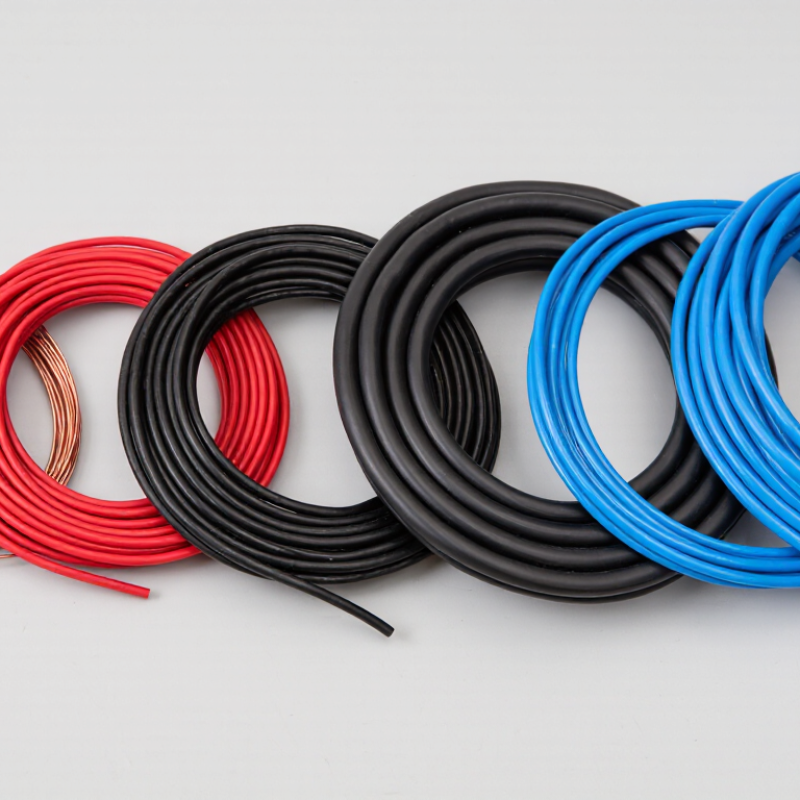
Flexible wire is not defined by softness alone. It is a conductor-and-insulation assembly designed to bend without unacceptable damage or loss of electrical performance. Its flexibility depends on strand size, strand count, conductor material, insulation, and construction. A wire that bends easily during installation may not withstand repeated movement.
One useful classification is conductor construction: solid, stranded, fine-stranded, and extra-flexible. Solid conductors suit fixed routes but resist repeated bending. Stranded conductors bend more readily, while finer strands generally improve flexibility.
That distinction matters. Classifications also describe insulation and intended duty, such as fixed wiring, continuous flexing, or exposure to heat, oil, or abrasion. These labels are not interchangeable.
For equipment that moves, check the specified bend radius, flexing life, temperature range, and whether twisting is expected. A cable routed through a machine arm may need different construction from one pulled around a cabinet corner. Check the datasheet. “Flexible” alone does not establish suitability, and a generous strand count cannot compensate for incompatible insulation. In practice, installation space and motion pattern are easy to underestimate; measure both before choosing a type.

Wire flexibility depends on more than the metal. Copper is widely used because it conducts well and can be drawn into fine strands. A solid conductor bends at one point, while stranded conductors distribute the bend across smaller wires. More, finer strands can make routing through compact equipment easier, but strand count alone does not guarantee a long service life. That matters. Strand lay, conductor diameter, and bundle compaction also affect how readily a wire bends. A thick cable may still feel stiff, even with many fine strands.
Insulation and jacket materials shape flexibility too. PVC compounds vary: some stay pliable in ordinary conditions, while others stiffen in cold environments. Silicone insulation often remains flexible across a broad temperature range, but the finished cable’s performance depends on its full construction. A thick outer jacket can resist abrasion yet increase bending effort. Small details count. For wires that move repeatedly, check the specified bend radius and whether the rating covers continuous motion, not just occasional installation bends. A “high-flex” label alone is not enough; the application’s temperature, movement, and routing all matter. It is easy to focus on conductor strands and overlook the jacket. That can lead to a wire that fits electrically but proves awkward to install.
Lower material stiffness can make a wire easier to bend when its dimensions and construction are the same. Values shown are approximate bulk-material Young’s modulus at room temperature.
Material alone does not determine cable flexibility. Strand count, strand diameter, conductor lay, insulation, and cable diameter also have a major effect. Actual values vary with alloy and temper.
Flexible wire is not one product; its strands, insulation, and shape determine where it works best. Fine-stranded copper suits control panels and moving machinery, where conductors bend repeatedly. Extra-flexible welding cable handles high-current equipment that must move around a work area. PVC-insulated stranded wire is common in appliance wiring and general enclosures. Silicone-insulated wire tolerates heat near ovens or lighting fixtures, while rubber-insulated cable is useful for portable tools exposed to abrasion. Check the datasheet.
For outdoor or industrial runs, XLPE-insulated stranded wire offers durable insulation, but the complete cable still needs the right environmental rating. Tinned-copper wire resists corrosion and is often chosen for damp marine settings. Braided copper provides flexible grounding or shielding around equipment. Flat ribbon cable fits compact electronics with parallel connections, though repeated sharp folds can damage it. Coiled cable stretches between handheld devices and fixed controls, then retracts when released. These types can overlap in construction, and “flexible” alone says little about bend life. Match the wire to current, temperature, movement, and installation conditions; a cable that feels soft on a bench may fatigue quickly in continuous motion.
| Flexible Wire Type | Conductor Construction | Insulation or Jacket | Key Characteristics | Typical Uses |
|---|---|---|---|---|
| General-Purpose Stranded Copper Wire | Multiple copper strands twisted together | Commonly PVC or another application-rated polymer | More tolerant of repeated bending than solid wire of the same gauge; available in a wide range of sizes and insulation ratings. | Control panels, equipment wiring, appliances, and connections that may need occasional movement. |
| Fine-Stranded Flexible Wire | Many relatively small copper strands | PVC, rubber, or other suitable insulation | More pliable than standard stranded wire; useful where routing space is limited or conductors must bend during installation. | Portable equipment, machine wiring, vehicle wiring, and moving connections with moderate flexing. |
| Extra-Fine-Stranded Wire | A high count of very fine copper strands | Often PVC, TPE, or rubber, selected for the environment | Highly flexible and suited to repeated movement; needs compatible terminals and careful strain relief. | Robotics, drag chains, flexible equipment leads, and applications with frequent movement. |
| Silicone-Insulated Flexible Wire | Typically stranded copper | Silicone rubber insulation | Retains flexibility across a broad temperature range; the precise temperature and voltage limits depend on the wire specification. | High-temperature equipment, heating appliances, lighting assemblies, and wiring near warm components. |
| PVC-Insulated Flexible Wire | Usually stranded copper | Polyvinyl chloride (PVC) | Common, economical insulation with a range of grades and ratings; flexibility and environmental resistance vary by formulation. | Indoor equipment wiring, control circuits, appliance leads, and general electrical installations where permitted. |
| PTFE-Insulated Flexible Wire | Usually stranded copper, sometimes silver-plated copper | Polytetrafluoroethylene (PTFE) | Offers high-temperature capability and resistance to many chemicals; confirm the specific product rating and installation requirements. | Aerospace and instrumentation assemblies, laboratory equipment, and compact wiring exposed to heat or chemicals. |
| XLPE-Insulated Flexible Cable | Stranded copper conductors | Cross-linked polyethylene (XLPE), sometimes with an additional jacket | Provides electrical and thermal properties suited to power applications; flexibility depends on conductor stranding and cable construction. | Power distribution, industrial equipment, and installations requiring a cable designed for the applicable voltage and environment. |
| Rubber-Insulated Flexible Cable | Flexible stranded copper conductors | Rubber or elastomer insulation and, in many designs, an outer sheath | Designed in grades for flexible service; resistance to abrasion, oil, weather, and temperature depends on the particular compound. | Portable tools, temporary power connections, workshop equipment, and other mobile electrical equipment. |
| Shielded Flexible Control Cable | One or more stranded copper conductors with an overall or individual shield | Insulated cores, conductive screen, and protective outer jacket | Shielding helps reduce electromagnetic interference when correctly grounded and installed; it does not eliminate all interference. | Sensor and signal wiring, automation systems, control panels, and equipment operating near electrical noise sources. |
| Welding Cable | Very fine-stranded copper conductor | Durable, flexible rubber or elastomer jacket | Designed for high-current welding circuits and frequent handling; conductor size and duty cycle must match the welding equipment. | Connections between welding power sources, electrode holders, and work clamps. |
Choosing flexible wire is less about naming a “best” type and more about matching its construction to the job. Compare conductor material, strand class, insulation, temperature rating, and bend radius. The Copper Development Association reports copper at 100% IACS conductivity, while aluminum is about 61% IACS by volume. That difference affects conductor sizing; never assume equal gauges carry equal current.
Check strand construction next. IEC 60228 classifies flexible conductors as Class 5 or Class 6, with Class 6 using finer stranding for greater flexibility. For a moving machine lead, that can help reduce conductor fatigue. A stationary control panel may not need it. PVC is often economical for dry indoor wiring, while polyurethane can suit abrasion-prone routes. Silicone tolerates heat well, but its softness may be a poor fit where mechanical protection matters. Details count.
Then compare the insulation against actual conditions: oil, cleaning fluids, sunlight, heat, and repeated motion. A cable’s published bend radius and flex-life test matter more than “highly flexible” on a datasheet. One useful reference is the insulation and cable performance testing framework in IEC 60227 and IEC 60245. Ratings vary by product, though, so verify the exact test method. I would also leave room for uncertainty: real routing, tight cable ties, and sharp cabinet edges can shorten service life beyond laboratory results.
10 Best Flexible Wire Types for Your Application?
How to Choose a Flexible Wire for Your Requirements
Start with the job, not the wire’s feel. IEC 60228 distinguishes flexible Class 5 and Class 6 conductors, with Class 6 using finer strands. Finer strands can suit frequent movement, but they do not remove the need to check current, voltage drop, and operating temperature. For a cable routed through a tight machine enclosure, confirm its minimum bend radius and expected flexing cycles. Small detail. It matters.
Then match insulation and jacket materials to the environment. Heat, oil, water, sunlight, abrasion, and chemicals can each narrow your choices. Copper is a common conductor, but its resistance rises as it heats; sizing from current alone can therefore be misleading. The International Annealed Copper Standard uses 100% conductivity as the benchmark for annealed copper at 20°C. Treat that as a reference, not a guarantee of installed performance.
Application scale also matters. The International Energy Agency’s Global EV Outlook 2024 reported nearly 14 million electric cars sold worldwide in 2023, increasing demand for cables used in charging equipment and vehicle systems. That does not make one wire type right for every charging setup. Check the cable’s rating, connector compatibility, routing, and thermal conditions against the equipment documentation and applicable standards. A softer cable may be easier to handle, yet it can still fail early if its jacket or conductor construction does not fit the actual movement and exposure. A useful review leaves room to reconsider assumptions.
Whether you’re looking for fire-rated walls, doors, openings, floors or a specialty service, we have the solution for you. With over 40 years of experience in testing, innovating, and providing technologically advanced fire-rated glass and framing products, we deliver unyielding performance and quality at a competitive price.
