- Proudly Made in the USA

Choosing a Bath Ventilation Fan is not simply a matter of comparing airflow numbers. Bathrooms differ widely in size, climate, construction, and daily use. A compact apartment in Singapore faces different humidity challenges than a cold home in Canada. Buyers also need to consider voltage, duct diameter, noise levels, humidity controls, warranty support, and local installation requirements.
Building scientist Joseph Lstiburek offers a useful principle: “A building is a system.” His observation applies directly to bathroom ventilation. A powerful fan may still perform poorly when the duct is crushed, the exterior damper is blocked, or replacement air cannot enter. Small details matter. A steamy mirror, damp ceiling corner, or lingering towel odor can reveal weak ventilation before serious damage appears.
This guide examines ten Bath Ventilation Fan options for global buyers. The comparison focuses on measured airflow, operating noise, energy use, moisture sensing, installation flexibility, and manufacturer reliability. Product claims deserve careful checking. Laboratory figures may not match real homes. No ranking is perfect.
Some buyers may prioritize quiet operation. Others may need strong extraction for a large family bathroom. Coastal users may value corrosion-resistant materials, while colder regions may require backdraft protection. We consider these practical differences instead of treating every bathroom alike. Readers should still verify electrical standards and building rules locally. That final check is easy to skip, yet it can prevent costly mistakes.
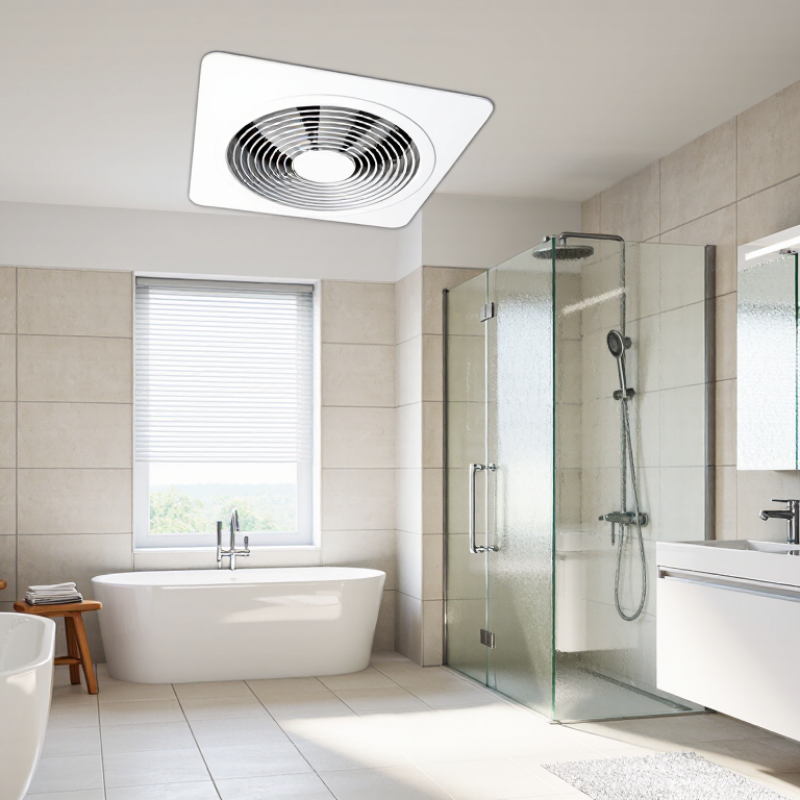
For global buyers, an effective bathroom ventilation fan must remove moisture, odors, and pollutants quietly. Performance matters beyond advertised airflow. ASHRAE Standard 62.2-2022 specifies 50 cubic feet per minute for intermittent bathroom exhaust, or 20 continuously. That benchmark is useful, but not universal. Room size, duct length, climate, and local code can change the right choice.
The WHO Indoor Air Quality report on dampness and mould links humid indoor conditions with respiratory symptoms. A suitable fan should run after showers, ideally through a timer or humidity sensor. Look for independently tested airflow, low noise, backdraft protection, and smooth, insulated ducting. Exhaust must reach outdoors, not a ceiling void. Voltage and frequency also matter across markets. A 230-volt model is not automatically suitable for every 230-volt installation. Installation quality often decides real performance.
Tips: Hold a tissue near the grille; weak pull may indicate blockage or poor sizing. Check the duct exit after rain. Use a timer in humid climates, but avoid assuming one setting fits every household. ASHRAE guidance offers a starting point, not a guarantee. I would question impressive airflow claims without independent testing. That caution is healthy.
| Rank | Recommended Fan Configuration | Airflow (CFM) | Noise (sones) | Input Power (W) | Duct Diameter | Voltage Class | Suggested Room Area | Key Effectiveness Feature | Overall Score |
|---|---|---|---|---|---|---|---|---|---|
| 1 | Quiet premium ceiling fan with humidity sensor | 110 | 0.3 | 25 | 150 mm / 6 in | 100–240 V, model-dependent | 10–14 m² | Automatic moisture control reduces condensation and mold risk while maintaining low sound levels. | 9.6/10 |
| 2 | High-airflow ceiling fan for large bathrooms | 150 | 1.2 | 40 | 150 mm / 6 in | 100–240 V, model-dependent | 14–20 m² | High extraction capacity supports effective air changes in spacious or frequently used bathrooms. | 9.4/10 |
| 3 | Energy-efficient compact ceiling fan | 80 | 0.8 | 15 | 100 mm / 4 in | 100–240 V, model-dependent | 7–10 m² | Low electrical demand helps reduce operating costs in homes where the fan runs daily. | 9.2/10 |
| 4 | Wall-mounted axial fan for short duct runs | 95 | 1.8 | 22 | 150 mm / 6 in | 100–240 V, model-dependent | 8–12 m² | Direct wall discharge simplifies installation where a short, straight exhaust route is available. | 8.9/10 |
| 5 | Timer-controlled ceiling exhaust fan | 100 | 1.0 | 24 | 150 mm / 6 in | 100–240 V, model-dependent | 9–13 m² | Adjustable run-on time continues extraction after showering, improving moisture removal without constant operation. | 8.8/10 |
| 6 | Slim inline duct fan for difficult layouts | 120 | 1.5 | 35 | 150 mm / 6 in | 100–240 V, model-dependent | 10–16 m² | The remote motor placement can reduce bathroom noise and maintain airflow through longer duct sections. | 8.7/10 |
| 7 | Continuous low-speed ventilation fan | 60–90 | 0.6 | 10–18 | 100–125 mm / 4–5 in | 100–240 V, model-dependent | 6–10 m² | Quiet background ventilation helps control humidity in bathrooms with limited windows or poor natural airflow. | 8.5/10 |
| 8 | Heat-recovery ventilation unit for cold climates | 80–120 | 1.5–2.5 | 35–70 | 125–150 mm / 5–6 in | 100–240 V, model-dependent | 8–14 m² | Transfers part of the outgoing heat to incoming air, helping reduce heat loss during winter ventilation. | 8.4/10 |
| 9 | Compact fan with integrated LED light | 90 | 1.3 | 30–45 | 150 mm / 6 in | 100–240 V, model-dependent | 8–12 m² | Combines general lighting and exhaust ventilation in one ceiling opening, useful for renovations with limited space. | 8.1/10 |
| 10 | Basic economical ceiling exhaust fan | 70 | 2.0 | 20–30 | 100 mm / 4 in | 100–240 V, model-dependent | 6–9 m² | A practical choice for small bathrooms when adequate make-up air and a short, unobstructed duct route are available. | 7.8/10 |
Performance figures are representative specification ranges for commonly available bathroom ventilation configurations. Actual airflow, sound, power consumption, voltage compatibility, and installation requirements vary by model and market.

Choosing a bathroom ventilation fan starts with the room, not the product label. Axial fans suit small bathrooms with short, straight duct runs. They move air efficiently through an exterior wall. Centrifugal fans handle longer ducts and several bends more reliably. They are useful in larger bathrooms, interior rooms, or homes with restricted airflow.
For quiet operation, an inline fan can sit away from the bathroom, often in a ceiling void or attic space. This arrangement reduces motor noise near the shower. It can also serve more than one wet area when designed correctly. A humidity-sensing fan works well in busy family bathrooms. It starts when moisture rises and continues running after bathing. That feature sounds convenient, but sensors may need adjustment in naturally humid climates.
Small rooms need careful placement. Install the exhaust point near the shower, while keeping it away from direct water spray. A timer switch helps remove lingering moisture after lights are turned off. In cold regions, insulated ducting can reduce condensation inside the ceiling. In coastal areas, corrosion-resistant materials deserve attention.
A fan that feels powerful in a showroom may perform poorly with a long duct. I have seen this mistake create damp mirrors and peeling paint. Airflow ratings should be checked against the actual duct length and resistance. Maintenance matters too. Dust on the grille can quietly reduce performance. No fan fixes poor outdoor venting, and that detail is easy to overlook.
The chart uses recommended intermittent exhaust airflow targets in cubic feet per minute (CFM). The figures are based on widely used residential ventilation guidance: approximately 1 CFM per square foot for bathrooms up to 100 square feet, with additional airflow added for multiple plumbing fixtures.
Ceiling and low-profile fans suit compact bathrooms, wall-mounted and window fans work well where ceiling ducting is difficult, while inline, mixed-flow, centrifugal, humidity-sensing, timer-controlled, and heat-recovery systems are better suited to long ducts, high moisture loads, automatic operation, or energy-conscious buildings. Actual fan selection should also account for duct length, bends, noise, voltage, local building codes, and certified airflow performance.
How to Compare Airflow, Noise, Energy Use, and Durability
Airflow is the first practical measure. A fan must remove steam, odors, and moisture quickly, not merely spin quietly. Compare airflow in CFM or cubic meters per hour, using the same unit across models. A small bathroom may need modest capacity, while a windowless room often needs stronger extraction. Check the duct size too. A powerful fan connected to a narrow, bent duct can perform poorly. In real installations, a short, smooth duct usually delivers better results.
Noise matters most at night. Look for a tested sound rating, preferably measured at a stated distance. Numbers below 35 decibels often feel comfortable in bedrooms nearby, but installation can change the result. Loose grilles, vibrating ceilings, and long ducts create extra noise.
Very quiet.
Energy use deserves a closer look. Compare rated watts, standby consumption, and control features. A humidity sensor or timer can prevent unnecessary running, especially in family bathrooms. However, sensors may react slowly or activate after short showers.
My comparison method is not flawless. Local humidity and user habits can change the outcome.
Durability depends on more than a metal cover. Inspect motor construction, moisture resistance, washable grilles, and replacement-part availability. Coastal buyers should consider corrosion-resistant materials. In colder regions, a reliable backdraft shutter can reduce drafts. Check voltage compatibility and local installation requirements before purchase. A fan that survives years of dust and condensation is usually worth more than one with impressive specifications.
Top Ten Bath Ventilation Fans for Different Global Needs
The best bathroom ventilation fan depends on climate, room size, and electrical conditions. A compact ceiling fan suits small apartments with short duct runs. Larger rooms need stronger airflow, especially after long, hot showers. In humid coastal regions, corrosion-resistant housing can extend service life. Cold-weather buyers may prefer a model with a backdraft shutter. It helps prevent chilly air from entering.
Noise also matters. A fan rated below 35 decibels usually feels more comfortable near bedrooms. Humidity sensing adds convenience, but its response may vary with steam and airflow. For rental properties, a simple timer control can be more dependable. Always check voltage, frequency, duct diameter, and safety certification for your market. A powerful fan is not automatically better. Poor ducting can reduce performance and create vibration.
Tips: Measure the bathroom before buying. Keep the duct short and straight when possible. Clean the grille every few months. Test the fan after installation. This catches unusual noise early. Do not ignore condensation on mirrors or walls. It may signal weak extraction, even when the fan sounds quiet. My own assessment would still allow room for doubt: published airflow figures rarely reflect every installation. Local building guidance and a qualified electrician should settle the final choice.
Choosing among the 10 best bath ventilation fans requires more than comparing airflow numbers. Installation conditions can change performance dramatically. Measure the room, ceiling height, and duct length before ordering. Measure twice. A short, straight duct usually removes moisture more effectively than a narrow, winding one. Seal joints carefully, and terminate the duct outdoors with a weather-resistant hood and backdraft damper. Do not discharge humid air into an attic or ceiling cavity.
Electrical safety varies across countries. Check the local voltage, frequency, wiring rules, and required protection before installation. In many regions, a residual-current device or ground-fault protection is expected near bathrooms. The fan’s ingress-protection rating must match its location and exposure to moisture. A qualified electrician should confirm connections, especially when a timer, humidity sensor, or combined light is included. Product manuals are useful, but local regulations take priority.
Maintenance affects real-world reliability. Clean the grille every few months, particularly in homes with dust or long-haired pets. Inspect the duct outlet for blocked screens, insects, or crushed flexible tubing. Listen for new vibration or a slower start. These signs may appear before visible damage. A common mistake is trusting a powerful motor while ignoring poor duct design. I have seen quiet fans underperform for that reason. My own assessment would remain cautious: noise ratings and airflow figures may come from controlled tests, not every bathroom. Small errors matter.
Whether you’re looking for fire-rated walls, doors, openings, floors or a specialty service, we have the solution for you. With over 40 years of experience in testing, innovating, and providing technologically advanced fire-rated glass and framing products, we deliver unyielding performance and quality at a competitive price.
