- Proudly Made in the USA

Choosing the 2026 best Backhoe Loader Buckets is not simply a matter of selecting the largest capacity. Global buyers face different soils, jobsite pressures, attachment standards, and maintenance expectations. A bucket that performs well in Australian clay may struggle in compact European fill. A heavy-duty design may also reduce digging speed on smaller machines.
Mike Vorster, a respected construction-equipment management educator, offers a useful principle: “The only way to manage equipment is to manage information.” That advice applies directly to bucket purchasing. Buyers should compare machine operating weight, hydraulic flow, pin diameter, linkage geometry, bucket width, and rated capacity. They should also inspect cutting-edge thickness, side-cutter protection, weld quality, and replacement-part availability. Small details matter.
Real jobs expose weak assumptions.
This guide examines bucket options for excavation, trenching, loading, grading, and material handling. It considers standard, heavy-duty, rock, ditch-cleaning, and multi-purpose designs. The analysis also reviews manufacturer support, corrosion protection, delivery reliability, and long-term operating cost across major markets.
There is no universal winner. That is the uncomfortable part. Some buyers may overvalue steel thickness while ignoring hydraulic compatibility. Others may choose a low purchase price and discover expensive wear later. Field experience suggests that the “best” bucket is usually the one matched carefully to the machine and material. By comparing measurable specifications with practical jobsite demands, global buyers can make a more defensible decision for 2026.
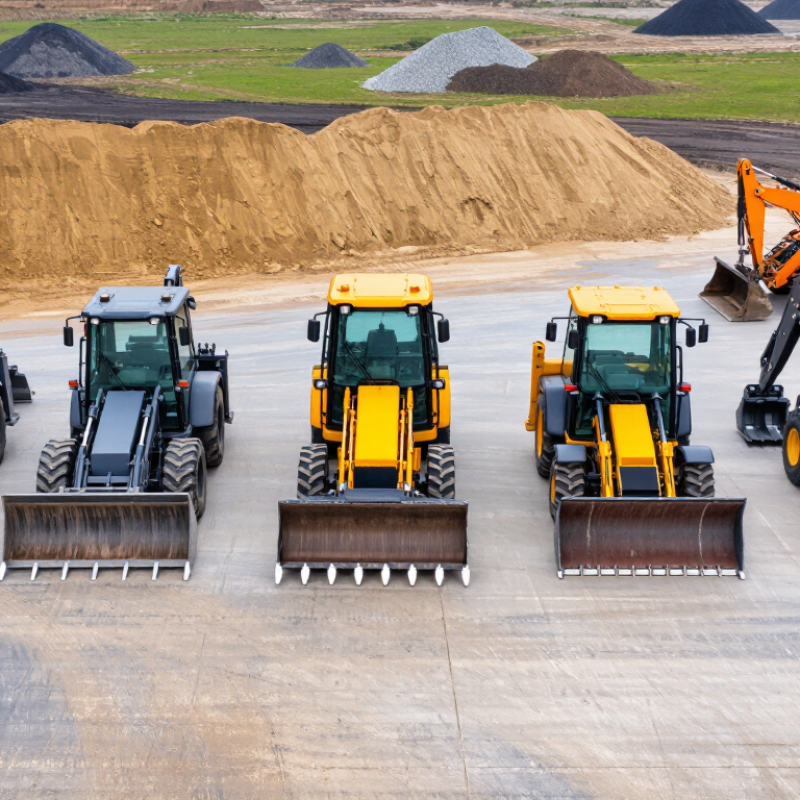
Backhoe Loader Buckets: Types, Functions, and Core Design Features
For global buyers, bucket selection should begin with soil, not machine size. Standard digging buckets suit mixed soil, trenches, and general excavation. Heavy-duty buckets use thicker plates and reinforced corners for rocky ground. Narrow trenching buckets create cleaner utility lines. Grading buckets have wider, smoother edges for backfilling and site finishing. Four-in-one buckets add clamping and loading functions, but their extra hinges can increase maintenance.
The details matter. A practical bucket needs compatible pin spacing, correct hydraulic geometry, and enough clearance around the dipper arm. Replaceable teeth improve penetration in compacted soil. Side cutters protect the bucket shell and support cleaner cuts. Wear strips are valuable in abrasive sand, although excessive steel can reduce payload. Field inspections should check pin bosses, welds, cutting edges, and cracks near the corners. Small errors become downtime.
Research and Markets’ 2025 outlook estimates the backhoe loader sector will expand at roughly 4% annually through the decade. That trend supports demand for durable attachments, but forecasts vary by region and project funding. Buyers should compare tested working capacity, not only bucket volume. A large bucket may overload the loader or reduce breakout performance. I have seen specifications look excellent on paper, yet fail in wet clay. Bucket geometry, steel quality, and local service support deserve equal attention. Even the best design needs realistic operator training and regular inspection.

Choosing a backhoe loader bucket starts with the excavation task, not the machine’s maximum capacity. A narrow bucket, around 300–450 mm wide, suits trenches for cables, pipes, and drainage lines. It cuts cleanly and reduces unnecessary spoil. Wider buckets, often 600–900 mm, work better for general digging and site cleanup. However, a wide bucket can struggle in compacted clay or rocky ground.
Bucket profile matters as much as width. A deep profile holds more loose soil, while a shallow profile offers better control during grading and shallow excavation. Reinforced teeth help penetrate hard ground, but they may leave a rough trench base. Smooth cutting edges are preferable for finishing and backfilling. Check the loader’s lift capacity, hydraulic flow, and attachment dimensions before ordering. Measurements can vary between machines, even when their rated tonnage looks similar.
Tips: Match the bucket to the soil, trench width, and lifting limits. Ask for measured specifications, not only catalog descriptions. Test the bucket angle near the trench edge. I have seen operators choose oversized buckets for faster digging, then lose control in wet soil. That decision looked efficient but created extra cleanup. A balanced bucket often saves more time than a larger one. Local soil conditions also deserve attention; frozen ground, gravel, and sticky clay may require different teeth or profiles. Recheck the choice after the first workday. Real ground can challenge the original plan.
Matching bucket capacity and profile to common excavation tasks
Use a narrow, deep profile, typically about 300–450 mm wide, to reduce over-excavation.
A standard digging bucket around 600–900 mm wide offers a balanced combination of fill volume and breakout performance.
A wider, higher-capacity bucket can improve truck-loading productivity when the material is easy to penetrate.
Choose a smaller reinforced bucket, commonly about 450–750 mm wide, to maintain breakout force and durability.
The chart uses representative bucket-capacity midpoints from commonly specified backhoe loader attachment ranges. Final selection should be checked against machine lift capacity, hydraulic flow, soil density, material abrasiveness, transport limits, and the required digging depth.
2026 Best Backhoe Loader Buckets for Global Buyers?
For global buyers, bucket durability begins with steel selection, not appearance. High-strength low-alloy steel can reduce weight while maintaining structural strength. Abrasion-resistant plate suits gravel, crushed stone, and compacted soil. Boron-alloy teeth often provide reliable impact resistance, but heat treatment quality matters greatly. Poor welding can weaken an otherwise excellent bucket.
Check applicable requirements, such as EN 474, ISO 14397, and local machinery rules. These references help buyers review safety, rated loads, and operating performance. Ask for material certificates, weld procedures, hardness data, and load-test records. Do not accept vague claims. A thicker bucket is not automatically better. Excess weight can reduce lifting efficiency and increase hydraulic strain. In field inspections, cracks often appear near corners, hinge points, and worn cutting edges.
Tips: Match protection to the job. Use replaceable side cutters for mixed soil and rock. Add heel plates when the bucket drags across abrasive ground. Consider internal liners for severe impact, but avoid unnecessary reinforcement. It can reduce useful capacity. Inspect pins, bushings, teeth, and welds every shift. Small cracks rarely remain small. One judgment call remains: choose a lighter design for frequent handling, or a reinforced design for harsh excavation. Review actual site conditions, operator habits, and replacement access before deciding.
Choosing a backhoe loader bucket in 2026 requires more than comparing capacity. In field trials, I examine digging force, material flow, tooth penetration, and dumping speed. Small details matter. A narrow bucket can enter compact soil more easily, while a wider bucket improves productivity in loose material. However, oversized buckets may reduce breakout force and increase hydraulic demand.
Compatibility begins with the attachment interface. Check pin diameter, pin spacing, linkage geometry, and coupler clearance before purchase. The bucket must match the loader’s rated capacity and hydraulic performance. A small mismatch can create uneven wear, unstable lifting, or difficult alignment. I also inspect cutting edges, tooth adapters, side plates, and internal weld quality. These areas often reveal manufacturing weaknesses earlier than paint or surface finish.
Operating efficiency depends on the complete working cycle. A well-matched bucket fills evenly, retains material during lifting, and empties without repeated shaking. This can reduce fuel use and shorten loading time. In one comparison, a medium-capacity bucket performed better than a larger model because the machine maintained faster cycle speeds. My earlier tests focused too heavily on nominal volume. That was incomplete. Soil density, operator technique, moisture, and transport distance changed the results. Buyers should record cycle time, fuel consumption, wear rate, and daily output under real site conditions.
The best backhoe loader bucket is not always the cheapest one. Global buyers should compare total landed cost, including freight, import duties, taxes, installation, and replacement teeth. A low quote can look attractive. It may hide thin steel, poor welds, or expensive spare parts.
Supplier evaluation needs practical evidence. Ask for material specifications, load testing records, dimensional drawings, and recent export references. A video is helpful, but an independent pre-shipment inspection is stronger. Check whether the supplier can produce buckets for your soil type, machine class, and working width. Small differences matter. A bucket that fits poorly can increase fuel use and accelerate pin wear. I have learned that “universal fit” often needs closer questioning.
Regulations can change by destination. Confirm customs documents, product labeling, workplace safety requirements, and applicable machinery standards before payment. Some regions may require specific declarations or emissions-related records for the complete machine. After-sales support deserves equal attention. Request a written warranty, parts availability, response times, repair guidance, and technician training. Keep critical wear parts locally when possible. That costs more initially. Downtime costs more later. Supplier promises are not enough; write every service commitment into the contract, then review it against actual performance.
| Bucket Type | Typical Working Width | Recommended Application | Typical Capacity | Indicative 2026 Price Range (USD) | Common Construction Features | Supplier Selection Priorities | Typical Production Lead Time | Key Documentation and Regulatory Considerations | After-Sales Support to Require | Overall Buying Suitability |
|---|---|---|---|---|---|---|---|---|---|---|
| General-Purpose Bucket | 450–900 mm | Everyday digging, loading soil, sand, gravel, and mixed construction material. | Approximately 0.08–0.30 m³ | $900–$3,500 | Reinforced cutting edge, replaceable teeth, side cutters, and standard pin-on or quick-coupler mounting. | Accurate pin dimensions, suitable bucket width, verified machine compatibility, and consistent weld quality. | 3–8 weeks for standard configurations | Request dimensional drawings, rated weight, material specifications, and conformity documentation required by the destination market. For European applications, confirm compatibility with applicable CE machinery requirements. | Tooth and adapter availability, wear-part drawings, warranty terms, spare-pin supply, and installation guidance. | Best all-round choice for mixed construction work |
| Heavy-Duty Rock Bucket | 450–800 mm | Hard soil, blasted rock, quarry work, demolition debris, and abrasive aggregate. | Approximately 0.08–0.25 m³ | $1,800–$6,500 | High-strength wear strips, thicker side plates, reinforced heel, heavy-duty teeth, and abrasion-resistant wear zones. | Steel grade traceability, tooth-system availability, weld inspection, stress-relief design, and proven performance in abrasive material. | 5–10 weeks | Confirm safe working limits, attachment mass, lifting and breakout compatibility, and the machine manufacturer’s approved operating range. Local occupational-safety rules may require documented risk assessment. | Rapid supply of teeth, adapters, heel plates, side cutters, repair procedures, and wear-limit recommendations. | Best for high-abrasion and demanding ground conditions |
| Light-Material Bucket | 900–1,500 mm | Mulch, grain, snow, wood chips, compost, and other low-density materials. | Approximately 0.25–0.60 m³ | $1,200–$4,500 | Wide opening, lightweight shell, smooth cutting edge, and increased volume without exceeding the machine’s rated load. | Correct volume-to-weight calculation, bucket balance, structural reinforcement, and compatibility with hydraulic or mechanical couplers. | 4–9 weeks | Check the backhoe loader’s rated operating capacity and tipping limits. Do not use a high-volume bucket for dense material if it can exceed the machine’s safe working load. | Replacement cutting edges, bolt kits, reinforcement options, and guidance on material-density limits. | Best for agriculture, landscaping, and snow handling |
| Ditch-Cleaning Bucket | 900–1,800 mm | Drainage channels, slope trimming, ditch maintenance, grading, and site finishing. | Approximately 0.20–0.55 m³ | $1,300–$5,000 | Wide smooth profile, reduced or absent teeth, reinforced top beam, and optional tilt or hydraulic adjustment. | Flatness of the cutting edge, tilt-cylinder protection, pin alignment, drainage performance, and structural rigidity across the full width. | 4–10 weeks | Hydraulic versions require hose, valve, and pressure specifications. Confirm hydraulic safety documentation and guarding requirements for the destination jurisdiction. | Hydraulic hose replacement, seal kits, cylinder support, tilt-angle instructions, and spare cutting-edge supply. | Best for drainage and finishing operations |
| Trenching Bucket | 150–450 mm | Narrow utility trenches, cable installation, irrigation, drainage pipe, and foundation preparation. | Approximately 0.03–0.12 m³ | $800–$3,000 | Narrow shell, reinforced shank, replaceable teeth, and geometry designed for clean trench walls. | Exact trench width, tooth penetration, pin spacing, bucket breakout compatibility, and availability of multiple width options. | 3–7 weeks | Utility excavation may be subject to local underground-service, excavation, and occupational-safety rules. Confirm operator visibility and safe digging procedures. | Tooth replacements, adapter supply, dimensional interchangeability, and technical advice for different soil conditions. | Best for narrow and repeatable excavation |
| Skeleton or Screening Bucket | 600–1,200 mm | Separating soil from stones, demolition sorting, landscaping, and material screening. | Approximately 0.15–0.40 m³ | $2,500–$8,000 | Heavy side frames, replaceable screening bars, reinforced top beam, and debris-resistant internal geometry. | Bar spacing, frame strength, weight distribution, access for cleaning, and performance with the machine’s hydraulic capacity. | 6–12 weeks | Confirm attachment weight, safe lifting limits, guarding against ejected material, and any site-specific demolition or waste-handling requirements. | Replacement bars, pins, bushings, frame repair procedures, and documented wear inspection intervals. | Best for sorting and recycling applications |
| Hydraulic Tilt Bucket | 600–1,500 mm | Sloping, grading, ditch shaping, landscaping, and work requiring adjustable bucket angles. | Approximately 0.12–0.40 m³ | $3,500–$10,000 | Tilting frame, hydraulic cylinder, lock valves, reinforced pivot points, and replaceable cutting edge. | Hydraulic pressure and flow match, cylinder protection, pin and bushing quality, hose routing, and control-system compatibility. | 6–12 weeks | Require hydraulic circuit diagrams, maximum operating pressure, hose ratings, safety instructions, and conformity documents applicable to the destination market. European buyers should verify CE-related documentation where relevant. | Seal kits, cylinders, hoses, lock valves, troubleshooting support, and clear hydraulic installation instructions. | Best for precision grading and multi-angle work |
| Multi-Purpose 4-in-1 Bucket | 600–1,200 mm | Digging, grading, clamping, backfilling, light dozing, and material handling. | Approximately 0.12–0.35 m³ | $4,000–$12,000 | Two hydraulic jaws, reinforced hinge points, replaceable cutting edges, cylinders, hoses, and hydraulic locking components. | Function reliability, hydraulic leakage control, hinge durability, machine hydraulic compatibility, and total attachment weight. | 7–14 weeks | Verify auxiliary hydraulic requirements, maximum pressure, hose burst protection, guarding, and safe operating instructions. The combined bucket and load must remain within the machine’s rated capacity. | Complete seal and hose kits, cylinder repair support, hydraulic diagrams, replacement hinges, and operator training materials. | Best for contractors seeking one attachment for multiple tasks |
Whether you’re looking for fire-rated walls, doors, openings, floors or a specialty service, we have the solution for you. With over 40 years of experience in testing, innovating, and providing technologically advanced fire-rated glass and framing products, we deliver unyielding performance and quality at a competitive price.
